Which shower entry are you planning?
Low-curb showers led Houzz's 2025 data at 44%; curbless were 20%.
No votes yet. Yours will be the first. · saved on this device
Loading...
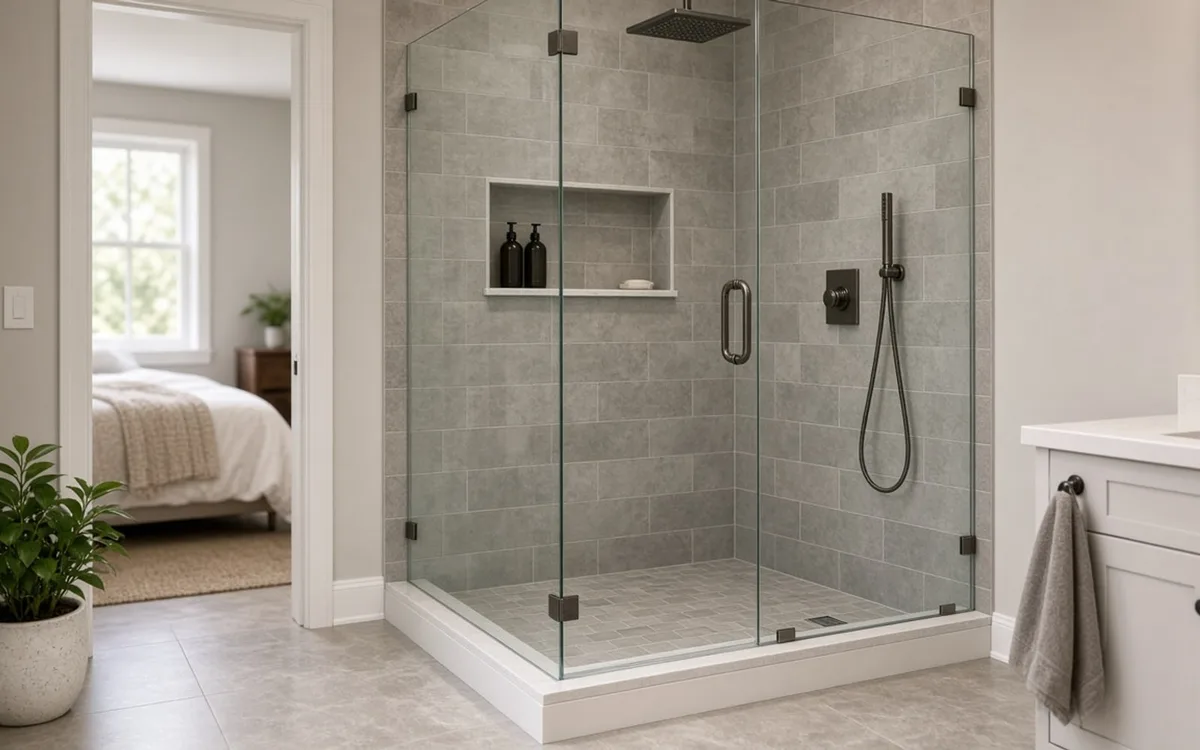
Bath Project Notes · Walk-In Shower Installation cost guide
A walk-in shower installed in an existing footprint costs about $3,500 to $7,000 with a prefab base and acrylic surround, $7,000 to $13,000 tiled on a tile-ready base with semi-frameless glass, and $11,000 to $18,000 curbless with a linear drain and frameless glass in 2026. Published averages run from $5,400 (HomeAdvisor) to $8,000 (Fixr) and $12,000 (This Old House, 2026), because prefab and tiled showers are averaged together. The base, the wall system, the entry and the glass are the four decisions that set the price; the membrane and the fan should never be where a bid saves money.
A walk-in shower is priced in layers. The base and drain set the first band, the wall system the second, the entry the third and the glass the fourth, with the valve, the fan and any drain move as add-ons. HomeAdvisor reports walk-in showers averaging about $5,400 within its $1,500 to $8,000 conversion range, and Houzz's 2025 study found 52% of bathroom renovators enlarged the shower, which adds floor work to those figures. Fixr's national average is $8,000 and This Old House's 2026 figure is $12,000. This Old House's tiers make a useful check on the cost table on this page: prefab $4,000 to $7,000, midrange tiled $8,000 to $13,000, and custom $14,000 to $20,000 or more, close to the three used here.
The cost table and calculator on this page give the ranges and the add-ons; this guide explains how the layers combine, which ones are labor-heavy, how the schedule affects the total, what to cut first and what three realistic shower budgets look like. The assembly itself, the flood test and the year-three failures are on the service page, and the wall and floor choices have their own comparisons.
| Item | Low | High | Unit | Notes |
|---|---|---|---|---|
| Walk-in shower, prefab base and acrylic surround | $3,500 | $7,000 | flat | Includes valve and framed door |
| Walk-in shower, tile-ready base, tiled walls, semi-frameless glass | $7,000 | $13,000 | flat | Standard size, point or linear drain |
| Curbless tiled shower with linear drain and frameless glass | $11,000 | $18,000 | flat | Floor recessed, extended membrane |
| Linear drain upgrade | $300 | $1,200 | per fixture | Allows one-plane slope |
| Frameless glass door and panel | $1,500 | $4,000 | flat | Measured after tile; 2–3 week lead |
| Thermostatic valve upgrade | $300 | $900 | per fixture | Over pressure-balance |
| Drain relocation, framed floor | $800 | $2,500 | flat | Slab foundations higher |
| Ducted humidity-sensing exhaust fan | $350 | $900 | flat | New duct to exterior |
Start with the base: a prefab acrylic or solid-surface base at $400 to $1,500 plus setting, or a tiled floor on a bonded membrane at $1,200 to $5,000 with a flood test. Add the walls: acrylic panels from $900, solid surface to $4,000, or tile from $1,500 to $6,000 depending on format and pattern. Add the entry: a standard curb at $150 to $500, a low curb at the same price, or a curbless entry with the floor recessed and a linear drain at $2,000 to $5,000 more. Add the glass: a framed door from $500, semi-frameless $800 to $1,500, frameless $1,500 to $4,000.
The three tiers in the cost table are those four decisions made consistently. Economy is prefab base, acrylic surround, standard curb, framed or semi-frameless door. Standard is tile-ready base, tiled walls, low curb, semi-frameless glass. Premium is a tiled curbless floor with a linear drain, large-format tile, frameless glass. Mixing tiers is normal and often sensible: a solid-surface base with tiled walls and frameless glass is a common mid-priced shower, and the base comparison explains when that mix fits.
Fixr's 2025 figures for whole showers by material, and for glass by type, bracket the same decisions. Natural stone has the widest range because slab and tile stone differ so much; a neo-angle enclosure costs more than a straight door because it needs three panels cut to the corner. The table in this section lists them as Fixr publishes them.
| Shower material or glass | Installed cost | Source |
|---|---|---|
| Acrylic shower | $2,000 – $5,000 | Fixr, 2025 |
| Fiberglass shower | $4,000 – $8,000 | Fixr, 2025 |
| Ceramic tile shower | $6,000 – $12,000 | Fixr, 2025 |
| Porcelain tile shower | $7,000 – $14,000 | Fixr, 2025 |
| Natural stone shower | $6,000 – $20,000 | Fixr, 2025 |
| Framed glass door | $300 – $1,200 | Fixr, 2025 |
| Frameless glass door | $900 – $2,300 | Fixr, 2025 |
| Neo-angle glass enclosure | $1,500 – $3,500 | Fixr, 2025 |
Size matters most when it changes the build method. Fixr's 2025 figures show a custom tiled shower costing about twice a prefab one at every size, and both rising steeply from a 36-inch square to a 60-inch square, which has nearly three times the floor area. Within one method the step is smaller: stretching a 60-by-32 alcove shower to 60-by-42 mostly adds tile and base area, while the valve, drain, fan and membrane detail stay the same. Enlarging into a tub or closet space is where size gets expensive, because it adds demolition, floor work and often a drain move.
| Shower size (inches) | Prefab | Custom | Source |
|---|---|---|---|
| 36 × 36 | $2,700 | $5,400 | Fixr, 2025 |
| 48 × 48 | $5,000 | $10,000 | Fixr, 2025 |
| 60 × 60 | $7,500 | $15,000 | Fixr, 2025 |
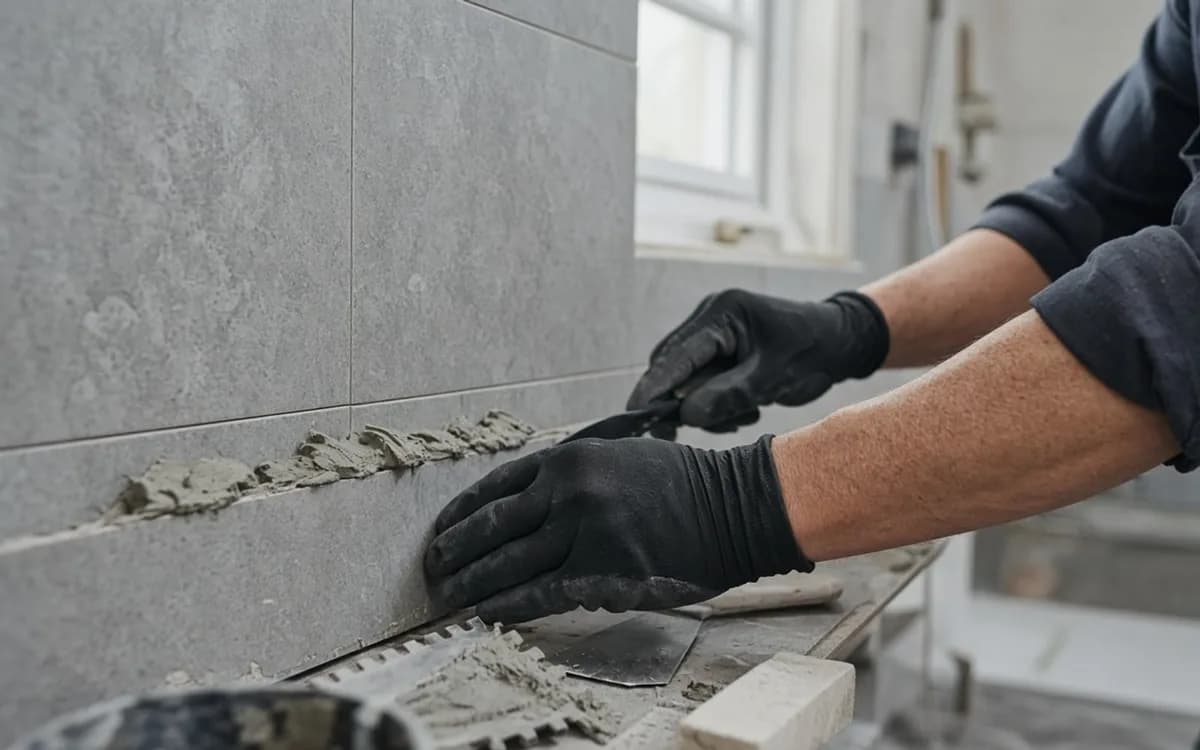
A linear drain upgrade at $300 to $1,200, a thermostatic valve at $300 to $900 above a pressure-balance unit, a second showerhead or a handheld on a slide bar at $250 to $700, a recessed niche at $150 to $400 and a bench at $300 to $900 are priced per item because each adds a discrete piece of plumbing or tile work. A drain relocation on a framed floor at $800 to $2,500 and a ducted humidity-sensing fan at $350 to $900 are flat because they are their own small jobs. Together, a well-specified shower can carry $2,000 to $4,000 in these lines.
Decide them before demolition, for the same reason the planning guide gives: a niche has to land between studs and away from the valve, a bench changes the membrane detail and the floor slope, a second head needs a diverter and a wider valve opening, a linear drain needs the floor framed for its trough. Each is inexpensive at rough-in and costly after tile. The calculator treats the curbless entry, frameless glass and fan as toggles; the smaller items belong on the proposal's option list. A full wet room goes further, and Houzz found 29% of wet-room renovators chose it for appearance rather than function.
More than in most rooms. HomeAdvisor lists most contracting pros at $50 to $75 an hour and plumbers at $45 to $200, and its 40% to 65% labor share is at the upper end for a tiled shower, because the tile setter's days dominate: two to five days for walls, another two to three for a tiled floor with the flood test hold, and grout and cleanup after that. A prefab base with panels flips the ratio, with the surround kit and base often costing more than the day's labor to fit them. Glass is mostly material and a half-day install; the valve and drain are a plumber's half-day at rough and another at trim.
That is why the labor-heavy tiers respond to region more than the material-heavy ones. A tiled curbless shower in a coastal metro, where skilled trade rates can run fifteen to thirty-five percent above national figures, moves toward the top of the $11,000 to $18,000 range on labor alone, while a prefab shower in the same city moves much less. It is also why a bid with a suspiciously low tile labor line for a tiled floor should be read as a thinner assembly rather than a bargain.
A prefab shower can be out of service for three to five days; a tiled shower for one to two weeks; a curbless tiled shower with floor work for two to three weeks. Add glass: templated after tile and delivered one to three weeks later, during which a tiled shower is usable with a temporary curtain rod, a fact worth confirming in the proposal. This Old House reports 2 in 3 bathroom projects finish in one to four weeks and about one in five run past a month, and in a shower-only project the reason is nearly always glass or a discovered floor problem.
The schedule costs money in two ways. Directly, more days is more labor; the flood test's 24-hour hold and grout cure are fixed waits that a rushed contractor is tempted to skip, which is the expensive shortcut. Indirectly, a one-bathroom household, which our analysis of the EIA's 2024 survey puts at 38.6% of occupied homes, pays in gym memberships or a relative's shower for every day the room is down, which is a real argument for a prefab base and panels in a hall bath even when tile is affordable.
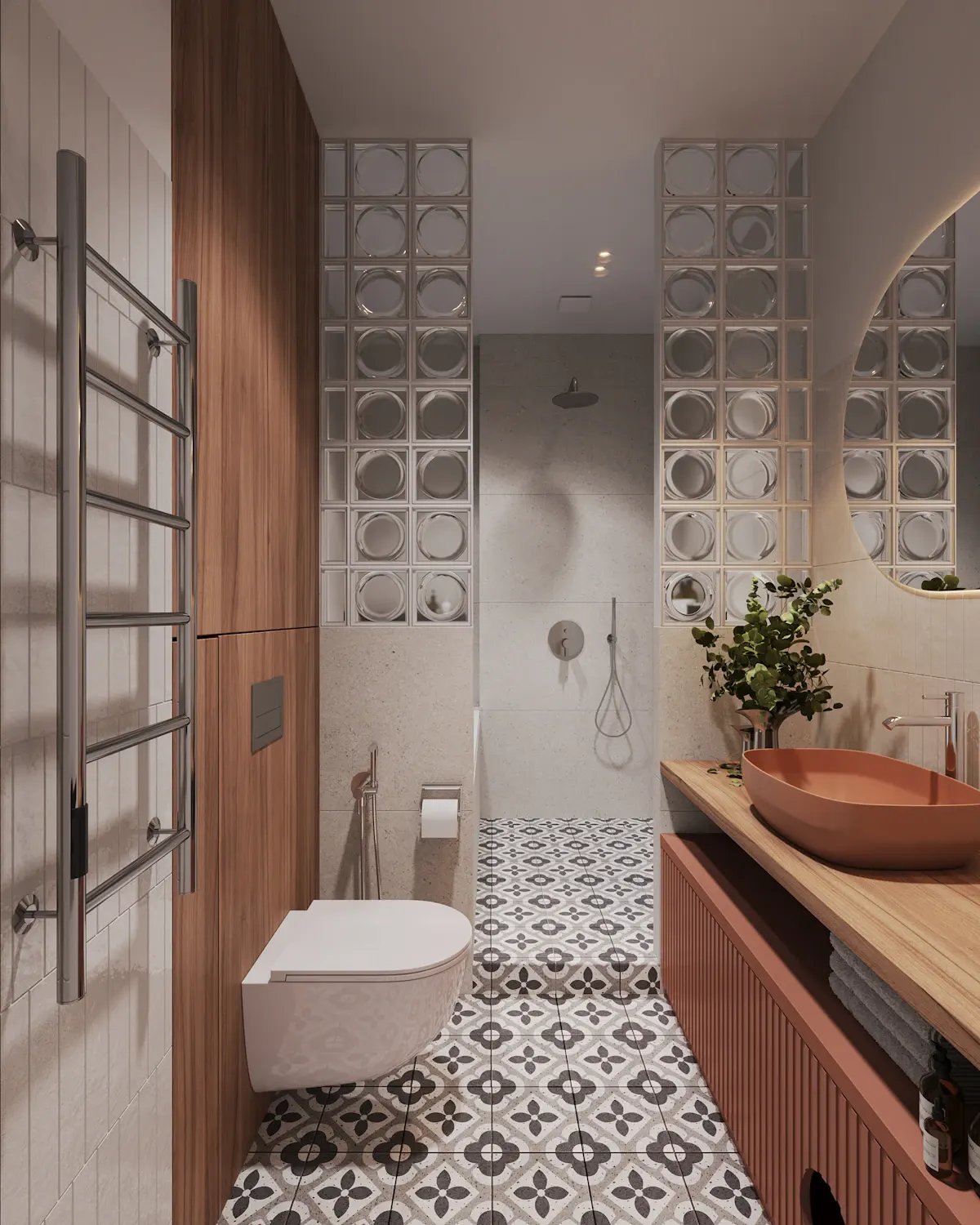
Cut the glass first: frameless to semi-frameless saves about $1,000 with almost no functional loss. Cut the tile format second: standard porcelain instead of large-format saves material and setting time. Cut the valve third: pressure-balance instead of thermostatic saves $300 to $900 unless someone in the household cannot react to a temperature swing. Cut the extras fourth: the second head, the bench, the second niche. Cut the entry last, and only if nobody in the household is over sixty or has a mobility condition; the curbless premium is the hardest to add later.
Never cut the membrane system or its accessories, the flood test, the two-inch drain, the blocking for grab bars and a future seat, or the fan and its duct to the exterior. Houzz reports 23% of bathroom renovators added grab bars and 24% added nonslip shower flooring; blocking now costs $100 and lets bars go anywhere later. If the number is still high after the first four cuts, the answer is a prefab base with solid-surface walls, which is a good shower, rather than a tiled shower with a thin assembly, which is not.
Economy hall-bath shower, 60-by-32-inch footprint, drain in place, about $5,800: demolition and disposal $600, plumbing rough and trim with pressure-balance valve $1,100, solid-surface base $900, acrylic surround $1,200, semi-frameless door $1,000, fan and duct $500, blocking, drywall repair and paint $300, permit $200. Labor is roughly $2,700. This sits near HomeAdvisor's $5,400 walk-in average.
Standard primary-bath shower, 60-by-36, about $10,500: demolition $700, plumbing with pressure-balance valve and handheld $1,500, tile-ready foam base and bonded membrane with flood test $1,900, porcelain wall tile and labor $3,300, floor mosaic $600, low curb $300, semi-frameless glass $1,400, fan $600, permit and contingency $700. Premium curbless shower, 72-by-42 with floor recess, linear drain, large-format porcelain, thermostatic valve, bench, niche and frameless glass: $15,000 to $19,000, with $2,000 to $3,000 more if a drain moves on a slab. The calculator returns similar figures for those inputs.
Water and energy are the measurable ones. The EPA reports a 2.0-gpm WaterSense showerhead saves 2,700 gal and 330 kWh a year against a 2.5-gpm head, which is the water heater's share of a daily shower; a multi-head shower with two 2.5-gpm heads running together doubles the draw and may exceed the water heater's recovery. A thermostatic valve does not use more water, but the larger showers it usually goes with do.
Maintenance is the other. Tiled walls and floors need grout sealed every year or two unless epoxy grout was used; glass needs a squeegee or a coating to avoid mineral spotting in hard-water regions; a prefab base's drain gasket and the base-to-wall caulk need renewing every few years; a fan's grille needs cleaning so it moves the air it was sized for. None of these is large, and all are cheaper than the repair they prevent, which is the same logic as the membrane and the flood test at the start.
By the numbers
Planning figures from published U.S. sources; every card links to where the number came from.
$1,500 to $8,000
for a tub-to-shower conversion; walk-in showers average about $5,400 (HomeAdvisor)
HomeAdvisor's shower remodel guide puts the average shower remodel at $7,000, a tub-to-shower conversion at $1,500 to $8,000 or more, and a walk-in shower at about $5,400. The low end is a prefabricated base and surround; the high end is a tiled, curbless custom shower.
HomeAdvisor / Shower Remodel Cost Guide (2025)52%
of Houzz bathroom renovators enlarged the shower; 18% grew it by more than half
Houzz found 46% kept shower dimensions, 20% enlarged by under 25%, 14% by 25 to 50% and 18% by more than 50%; only 2% shrank the shower. Enlarging usually means moving a wall or removing a tub, which is where waterproofing and framing scope grows.
Houzz / 2025 U.S. Houzz Bathroom Trends Study (2025)40% to 65%
of a bathroom remodel bill is labor, per HomeAdvisor
Because plumbing, tile and electrical work are labor-intensive, HomeAdvisor estimates labor takes 40% to 65% of the total. That is why small bathrooms cost more per square foot and why a tile-heavy shower dominates a proposal.
HomeAdvisor / Bathroom Remodel Cost Guide (2025)23%
of Houzz renovators adding specialty shower features chose grab bars; 24% chose nonslip flooring
Among the 55% of Houzz renovators adding specialty tub or shower features, nonslip flooring (24%) and grab bars (23%) topped the list, ahead of space for two (12%) and jets (12%). Grab bars need blocking in the wall, which must be placed before tile.
Houzz / 2025 U.S. Houzz Bathroom Trends Study (2025)The calculator uses the same bathroom remodeling benchmarks as this guide. Set the size and tier, then request a written estimate to check it against a real proposal.
Homeowner polls
Low-curb showers led Houzz's 2025 data at 44%; curbless were 20%.
No votes yet. Yours will be the first. · saved on this device
No votes yet. Yours will be the first. · saved on this device
89% of NKBA designers prefer smaller or no grout lines.
No votes yet. Yours will be the first. · saved on this device
Because the floor structure changes. The shower floor has to sit below the bathroom floor to keep the slope, which means recessing joists or building the whole floor up, extending the membrane across the room and usually installing a linear drain. That is one to three extra days and $2,000 to $5,000. A low curb contains water without any of that, which is why most renovators choose it and why curbless is priced as an add-on.
Less than the tier does, within the same footprint. Going from a 60-by-32 to a 60-by-42 shower adds tile area and a larger base or floor, perhaps $500 to $1,500, but the valve, drain, glass, fan and membrane cost about the same. Fixr's steeper size figures compare 36-inch and 60-inch squares, a near tripling of floor area. Enlarging a shower into the space a tub or a wall occupied adds demolition, floor work and sometimes a drain move, which is where the real cost of a bigger shower comes from.
It is the most visible upgrade in the shower and reads as premium to buyers, and it has no frame to collect soap film, but it needs more careful cleaning to avoid mineral spotting and can only be measured after tile. Semi-frameless gives most of the look at $800 to $1,500. In a primary bath in a mid-to-upper-market house, frameless is the expected choice; in a hall bath, semi-frameless is the sensible one.
About $300 to $900 more than a pressure-balance valve, installed. It holds a set temperature and controls volume separately, which suits multi-head showers, households with a member who cannot react quickly to a temperature swing, and anyone who wants the same setting every time. A pressure-balance valve, which is the code minimum for scald protection, is adequate for most single-head showers.
Usually $5,000 to $15,000, because the vanity, toilet, floor, lighting and paint stay. The trade-off is that the shower's new tile and glass sit next to old finishes, and that the floor tile outside the shower is not replaced, which matters if the shower goes curbless and the floors should match. If the rest of the room is under ten years old, shower-only is efficient; if not, price both and compare.
It needs a fan that ducts to the exterior, is sized to the room, and actually moves air, and many existing fans fail one of those tests. A glass enclosure holds moisture in a way a curtain did not, so a marginal fan becomes a mold problem. Replacing a fan and running a proper duct costs $350 to $900 and is the cheapest insurance in the room; keep the old fan only if it passes the tissue test and the duct is verified.
Unknown, which is the problem. A complete bid names the base or floor system, the membrane and its standard, the drain size and type, the wall system, the valve type, the curb or curbless method, the glass grade, the fan and duct, the flood test, the permit and the assumptions about existing conditions. If any of those is missing, ask for it in writing before comparing the total with anyone else's.
 Complete Bathroom Renovation · Cost guideComplete bathroom renovation cost in 2026: tiers, add-ons and what to cut first
A complete bathroom renovation in 2026 typically costs $9,000 to $16,000 with a prefab shower, $14,000 to $28,000 with a tiled shower and glass, and $22,000 to $50,000 or more when a drain or wall moves.
 Tub & Shower Conversions · Cost guideTub-to-shower conversion cost in 2026: from tub removal to finished glass
A tub-to-shower conversion costs about $4,000 to $7,000 with a prefab base and surround, $7,000 to $11,000 with a tile-ready base, tiled walls and semi-frameless glass, and $11,000 to $15,000 or more for a curbless tiled shower in 2026.
 Accessible Bathroom Remodeling · Cost guideAccessible bathroom remodel cost in 2026: what each level of change adds
An accessible bathroom remodel costs about $1,500 to $5,000 for basics added to an existing room, $10,000 to $18,000 to turn a tub into a curbless roll-in shower with a seat, and $20,000 to $35,000 or more for a full renovation that widens the door and moves the toilet in 2026.
 Service guideWalk-In Shower Installation
A walk-in shower installation rebuilds the bathing area from the subfloor up: a sloped base, a drain bonded to a waterproofing membrane, wall board and membrane, a valve, tile or panels, and an enclosure with a defined entry.
Service guideTub & Shower ConversionsA tub-to-shower conversion removes the bathtub and builds a shower in its alcove, usually with a new drain, a rebuilt substrate, a waterproofing membrane, new walls and an enclosure.
Service guideComplete Bathroom RenovationA complete bathroom renovation rebuilds the bathing area, vanity, toilet, floor, wall finishes, lighting and ventilation together, and may move drains, walls or the door.
 Free toolBathroom remodel cost calculator
Size, material tier and complexity in, a realistic budget range out.
 Free toolBathroom comparisons: the five decisions that change the assembly
Side-by-side tables for the decisions that change the price most.
 Free toolBathroom remodel quiz: find your scope and check the numbers
10 questions that show what you already know and what to check next.
 Free toolBathroom remodel polls: see what other homeowners are choosing
See what other planners chose and add your vote.
Tell us the size, the condition of what is there now, and what you want to change. Bath Project Notes passes your request to independent local professionals, who reply with written, no-obligation estimates. The service is free to use.