How many written proposals will you collect?
No votes yet. Yours will be the first. · saved on this device
Loading...

Bath Project Notes · Reviews
Reviews of bathroom contractors are most useful when they describe the shower assembly, the schedule, how a one-bath household was kept functional, and how damage under the old tub was handled, and least useful as a star count. This page explains what a genuine review contains, which patterns are warnings, and what to verify directly before signing.
Photo: Peter Muniz · License.
This site publishes no ratings or testimonials. Any resource that does is vouching for work it never saw, and star averages are easy to shape. What it can do is explain how to read reviews wherever you find them and what to ask a pro for instead. Houzz found 84% of bathroom renovators hired a professional, 45% a general contractor and 20% a bathroom remodeling specialist; choosing that professional well is worth an evening of reading, because the part of a bathroom that matters is covered by tile within a week.
A bathroom is a wet-area job in a small room, often the only one in the house. The qualities that matter are waterproofing discipline, sequencing, communication, and how surprises are priced. Read for those.
It names the scope: a conversion, a walk-in shower, a full renovation, an accessible remodel. It gives a timeline with the promised and actual dates, and says whether the household had a working toilet and shower along the way. It mentions the membrane or the flood test, even in passing, because a homeowner who saw the pan full of water for a day remembers it. It describes at least one problem, usually something found under the tub, and how it was priced and fixed. It says whether the final cost matched the proposal and why it differed.
Reviews that match your scope matter most. A pro with glowing feedback on vanity swaps may have little experience with curbless showers or drain relocation. Look for reviews describing your scope in houses of your era, and note how long ago they were written. With of Houzz bathroom renovators choosing a low-curb shower in 2025, recent reviews of barrier-reduced showers should not be hard to find. One review from a curbless job in a house like yours outweighs several from new construction.
Homeowner polls
No votes yet. Yours will be the first. · saved on this device
89% of NKBA designers prefer smaller or no grout lines.
No votes yet. Yours will be the first. · saved on this device
 Service guideComplete Bathroom Renovation
A complete bathroom renovation rebuilds the bathing area, vanity, toilet, floor, wall finishes, lighting and ventilation together, and may move drains, walls or the door.
 Service guideWalk-In Shower Installation
A walk-in shower installation rebuilds the bathing area from the subfloor up: a sloped base, a drain bonded to a waterproofing membrane, wall board and membrane, a valve, tile or panels, and an enclosure with a defined entry.
 Service guideTub & Shower Conversions
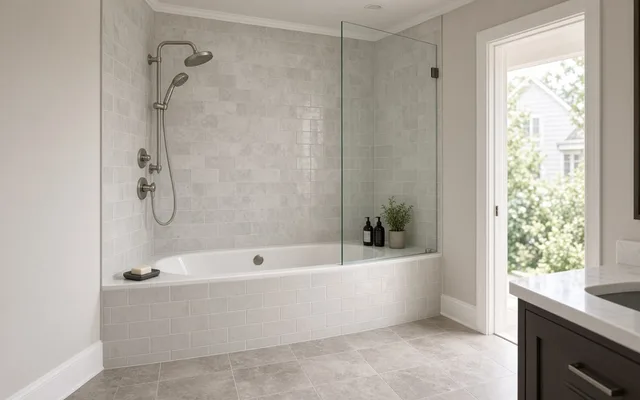
A tub-to-shower conversion removes the bathtub and builds a shower in its alcove, usually with a new drain, a rebuilt substrate, a waterproofing membrane, new walls and an enclosure.
Tell us the size, the condition of what is there now, and what you want to change. Bath Project Notes passes your request to independent local professionals, who reply with written, no-obligation estimates. The service is free to use.
Clusters of short, similar reviews posted within days. Reviews that never mention a problem. A pro who attacks critical reviewers rather than explaining. Repeated mentions of leaks after completion, grout cracking within a year, glass that did not fit, or a fan that turned out to vent into the attic. Schedule slips without explanation, and change orders that appeared without discussion. Any mention of a shower finished in one day is worth asking about; it usually means no membrane and no flood test.
Weigh volume against age and detail. Ten detailed reviews over three years from a small tile-and-plumbing shop can mean more than two hundred one-line reviews from a franchise. Houzz found 37% of renovators went over budget; a pro whose reviews consistently describe finishing on the number, with the tub-out surprise handled by a unit price, is rare and worth noticing.
License, where your state or city requires one, checked on the licensing board's site. General liability and workers' compensation insurance, by certificates sent from the insurer. References from two or three recent jobs of your scope, with the same questions to each: was the schedule kept, was the pan flood-tested, how was damage under the tub priced, would you hire them again. A written proposal that names the membrane system, the drain, the fixture models, the fan and its duct route, allowances and exclusions.
Then ask process questions in person. Who is on site daily? Who pulls permits and when is the rough-in inspection? How are hidden conditions priced? Is final payment tied to the punch list? For accessible work, who assessed the user and will there be a dimensioned plan? Houzz found 68% of bathroom renovators considered special needs, so that question comes up often. The contact page lists the four questions that sort proposals fastest.
Reviews narrow the list; the proposal decides. Two pros with equally good feedback and a $5,000 gap usually differ in the base type, the glass, whether the fan is included, or the drain work, not in honesty. Build the comparison table from the contact page and find the gap. If the cheaper proposal reuses the tub drain and glues a surround to drywall, the gap is the assembly. If it is the same assembly and one pro is simply cheaper, ask why.
When you are ready, read the services hub for what each scope's proposal should contain, run the calculator as a sanity check on totals, and take the quiz if scope is still in question. Then send one brief to the pros whose reviews and answers held up, and compare what comes back on the assembly before you compare it on price.
Treat them as a rough filter, not a verdict. Averages are shaped by who is asked to review and when. Read a dozen reviews in full, favoring those that describe the shower assembly, schedule and problems. A 4.5 with detailed accounts of a flood test and a subfloor repair handled cleanly is more informative than a 5.0 built on one-line praise.
Two or three from jobs of similar scope within the past two years, ideally one that is at least a year old so you can ask whether the shower has leaked. Ask each the same questions: schedule, flood test, hidden damage pricing, final cost versus proposal, and whether they would hire the pro again.
Read them and the responses. Every busy pro collects some. The question is whether complaints describe a pattern, such as leaks, glass fit or surprise change orders, and whether the responses explain and take responsibility. One angry review about a backordered vanity is noise; three about grout cracking in the first year is signal.
Yes. Boards list status, expiration, disciplinary history and often bond and insurance details, and the check takes two minutes. A photocopy can be stale. In states without contractor licensing, check for business registration and ask for insurance certificates sent directly from the insurer.
Franchise reviews tend to be numerous and short and often describe one-day acrylic installs; read for what was put behind the new surround. Local contractor reviews are fewer and more detailed. Neither is inherently better; what matters is whether the reviewed assembly is the one you want and whether problems were handled.
A mild one. Some ask when the tile is done because that is when homeowners are happiest. A review written before the glass, the punch list and the first month of use misses the part where leaks and fit problems appear. Wait, then write an honest review that names the scope and how issues were handled.
The proposal. Reviews tell you how a pro behaved on other jobs; the proposal tells you exactly what assembly you are buying on yours. A proposal that names the membrane, drain, flood test and fixture models from a pro with modest reviews is easier to enforce than a vague one from a pro with glowing reviews. Use both, but sign on the proposal.
Accessible bathroom remodeling plans the room around a specific person's transfers, reach, mobility aid and likely future needs: turning space, a curbless shower, blocking and grab bars, a comfort-height toilet, a reachable vanity, nonslip surfaces and a wider door.
