Which bathroom scope are you leaning toward?
Houzz found 75% of bathroom renovators upgraded the shower and 27% the tub.
No votes yet. Yours will be the first. · saved on this device
Loading...

Bath Project Notes · Polls
These polls ask the questions homeowners planning a bathroom argue about: which scope, what happens to the tub, which entry, enclosure and wall material, which accessibility feature matters, which vanity, how to ventilate, and how a one-bath household will manage. Vote and the running results appear. They are a tally of this site's visitors, not a survey, shown beside published studies for context.
Go to the pollsEvery poll below is answered by visitors planning bathroom remodeling. Results update the moment you vote, one vote per poll per browser, and your own choices stay highlighted so you can compare them with everyone else's. Nothing here is a sales survey; use it to see which trade-offs other homeowners are weighing before you request estimates.
15 polls · newly opened, so every vote shapes the first results · results saved on this device. Vote on any poll you have not answered; your own votes are highlighted.
Houzz found 75% of bathroom renovators upgraded the shower and 27% the tub.
No votes yet. Yours will be the first. · saved on this device
EIA's 2024 survey found 38.6% of homes have exactly one full bath.
No votes yet. Yours will be the first. · saved on this device
No votes yet. Yours will be the first. · saved on this device
No votes yet. Yours will be the first. · saved on this device
82% of Houzz renovators who removed a tub enlarged the shower.
No votes yet. Yours will be the first. · saved on this device
Low-curb showers led Houzz's 2025 data at 44%; curbless were 20%.
No votes yet. Yours will be the first. · saved on this device
No votes yet. Yours will be the first. · saved on this device
89% of NKBA designers prefer smaller or no grout lines.
No votes yet. Yours will be the first. · saved on this device
Houzz found 68% of bathroom renovators considered current or future special needs.
No votes yet. Yours will be the first. · saved on this device
No votes yet. Yours will be the first. · saved on this device
55% of Houzz renovators chose custom or semi-custom vanities; 61% of NKBA clients want dual sinks.
No votes yet. Yours will be the first. · saved on this device
57% of NKBA-surveyed designers report clients asking for heated floors.
No votes yet. Yours will be the first. · saved on this device
No votes yet. Yours will be the first. · saved on this device
Angi's typical range is $6,648 to $17,646; Houzz's major-remodel median is $22,000.
No votes yet. Yours will be the first. · saved on this device
No votes yet. Yours will be the first. · saved on this device
By the numbers
Poll results above are from visitors to this site; these figures come from published research.
44%
of Houzz bathroom renovators chose a low-curb shower; 20% went curbless (2025)
In Houzz's 2025 bathroom features data, 44% of renovators chose a low-curb shower, 42% an alcove, 20% curbless and 18% corner or dual showers. Barrier-reduced entry has gone mainstream, which changes the drain and slope work under the tile.
Houzz / 2025 U.S. Houzz Bathroom Trends Study (2025)82%
of Houzz renovators who removed a bathtub used the space to enlarge the shower
Among renovators who removed a tub, 82% enlarged the shower and 20% relocated it. That is the core logic of a tub-to-shower conversion: the 60-by-30-inch tub alcove becomes a shower with room to move.
Houzz / 2025 U.S. Houzz Bathroom Trends Study (2025)55%
of Houzz bathroom renovators chose custom or semi-custom vanities; 74% are wood
Houzz reports 33% fully custom and 22% semi-custom vanities, with 74% wood (maple 29%, white oak 23%); wood tones are now 28% of vanity colors. Custom vanities lengthen lead times and should be ordered before demolition.
Houzz / 2025 U.S. Houzz Bathroom Trends Study (2025)38.6%
of occupied U.S. homes had exactly one full bathroom in 2024 (EIA RECS stock)
EIA's preliminary 2024 Residential Energy Consumption Survey microdata shows 51.2 million occupied primary residences (38.6%) with exactly one full bathroom. In those homes a remodel takes the only bathroom out of service, which shapes the schedule more than the budget.
EIA / 2024 RECS preliminary household microdata (2024)Published studies give the national picture: Houzz found 44% chose a low-curb entry, NKBA's designers are removing tubs and asking for fewer grout lines, and AARP's older adults plan grab bars. The polls here show something narrower and sometimes more useful: what people planning a bathroom right now, reading the same pages you are, intend to do.
Vote in any poll that matches an open decision. Results are anonymous and unweighted. Use them to check whether your instinct is common, then settle the decision on the compare page and carry it into the request form.
Scope and bathing polls ask which of the scopes you are leaning toward, which bathroom it is, what bothers you most, and whether another bathroom will be available. Shower polls cover the tub decision, the entry, the enclosure and the wall material. Access polls ask which accessibility feature matters and who uses the room. Finish polls cover the vanity, heated floors and ventilation. Budget polls cover the range and how many proposals you will collect.
Houzz found 82% of renovators who removed a tub enlarged the shower and 55% chose custom or semi-custom vanities, while Houzz's feature findings show 76% upgraded countertops and 32% medicine cabinets; the tub and vanity polls show whether visitors here follow that pattern. The entry and wall polls do the same for the shower assembly questions, and the access poll shows which feature, from grab bars to a wider door, households rank first.
A poll result tells you what other planners intend, not what works. If 60% of voters expect curbless, that says curbless is a mainstream choice, not that your framed floor with no access below can take it. Use the comparisons for the trade-offs and the service pages for what each choice costs installed and what it requires behind the wall.
Results shift as new visitors vote, and early tallies with few votes are noisy. The stat cards beside each poll carry the published figure for the same question where one exists, so you can see both. Where no published figure exists, such as the other-bathroom question, the poll is the only signal and should be read as a rough one.
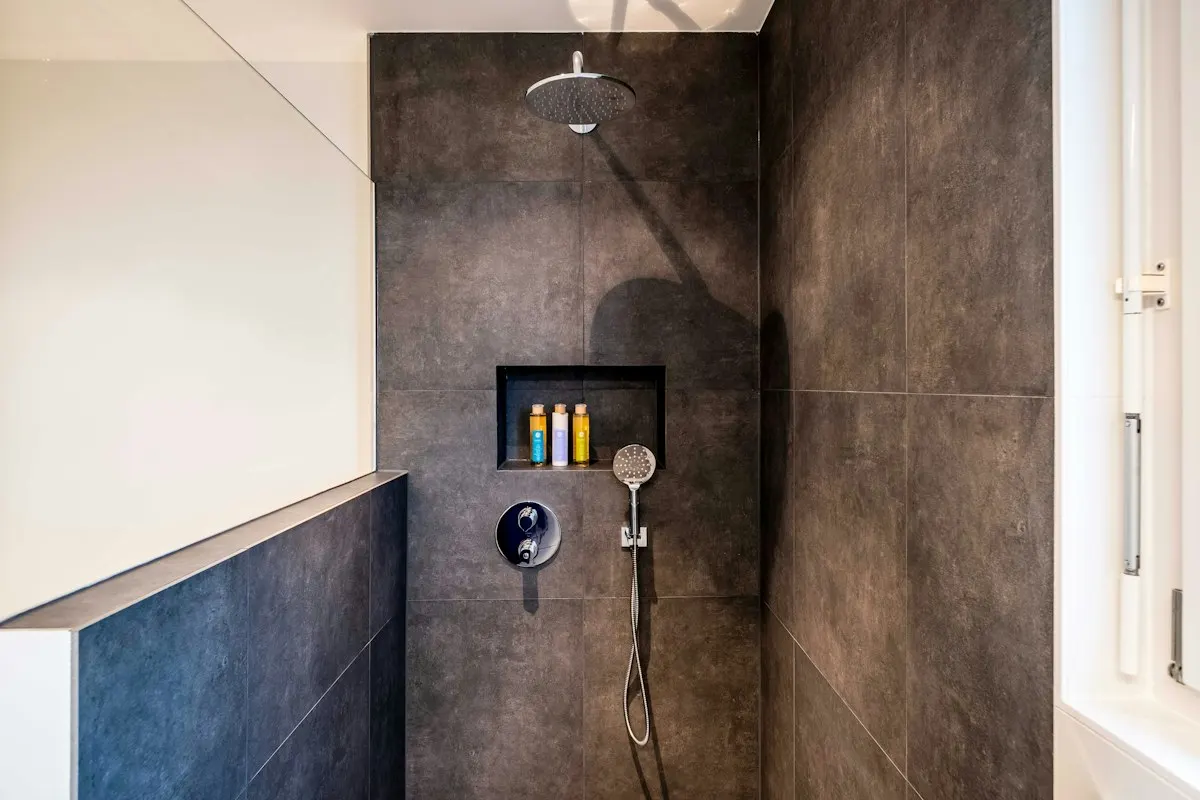
Our analysis of the EIA's 2024 household survey found 38.6% of occupied homes have exactly one full bathroom and only 30.3% have a half bath, and in one-bath homes the outage plan is the project. The other-bathroom poll shows how households are handling it, which is a prompt to ask each pro about nightly toilet resets and a curtain while glass is on order. The ventilation poll is the one to watch for a different reason: a large share of homeowners do not know where their fan's duct goes, and the answer decides whether the new shower stays mold-free.
The budget poll is anchored to HomeAdvisor's $12,151 average, Houzz's $22,000 major-remodel median and its 2026 study's $15,000 primary-bath and $7,000 guest-bath medians, so you can place yourself against each. The proposal-count poll is simple: three written proposals on one brief beats one, and the contact page explains how to write the brief. Use it to place your number, not to set it.
Every poll has a published cousin. The entry poll mirrors Houzz's low-curb and curbless shares; the access poll sits beside Houzz's grab-bar count of 23% and NKBA's finding that 80% of designers treat aging-in-place design as mainstream or emerging; the heated-floor poll echoes NKBA's 57% of clients asking for it. The difference is timing and population. The studies describe completed projects from a defined sample; the polls describe intentions from whoever is reading this site this month. When they disagree, the study is the safer planning number and the poll is the more current signal.
Use both the way you would use a pro's advice and a neighbor's: one is systematic, one is close to home. Then take the decisions you have settled to the calculator and the quiz. The one decision the polls cannot make for you is scope, which depends on your pan, your drain and your fan rather than anyone else's.
Yes, vote in every poll that matches a decision you are making. Each poll accepts one vote per visitor, and results update immediately. Polls you have voted in show the tally; polls you have not show the question until you choose an option.
No. Showing the tally first shapes answers, so the question appears alone until you vote. If you only want to see results, choose the option closest to your current thinking; the published figure on the adjacent stat card is visible either way.
Visitors to this site who are planning or considering a bathroom project. There is no sampling frame, no weighting and no verification, so the results describe this audience only. For population-level figures, the stat cards cite Houzz, NKBA, NAHB, AARP and EIA with their samples described.
Options are kept to a handful of neutral, mutually exclusive choices so results are readable. Where your choice is a variant, pick the closest. Where it is genuinely different, such as a walk-in tub rather than a tub or shower, the compare page and the accessible page discuss those alternatives.
No. The calculator is anchored to published cost benchmarks and the quiz to published studies. Polls are a separate, descriptive tally of visitor intent, shown near related content for context; they do not change any estimate, any quiz result or any recommendation on the site.
As a prompt to find out. Many homeowners choose the option about not knowing whether the fan ducts outside. Go look in the attic or at the exterior wall for a termination. If there is none, the fan is dumping moist air into the attic, and a ducted fan belongs in your scope regardless of what else you do.
Questions are reviewed with the rest of the site's content, and options may be updated when a new study changes the landscape, such as a shift in entry preferences or vanity styles. Existing tallies are kept when the question is unchanged.
 Free toolBathroom remodel cost calculator
Size, material tier and complexity in, a realistic budget range out.
 Free toolBathroom comparisons: the five decisions that change the assembly
Side-by-side tables for the decisions that change the price most.
 Free toolBathroom remodel quiz: find your scope and check the numbers
10 questions that show what you already know and what to check next.
 Service guideComplete Bathroom Renovation
A complete bathroom renovation rebuilds the bathing area, vanity, toilet, floor, wall finishes, lighting and ventilation together, and may move drains, walls or the door.
 Service guideWalk-In Shower Installation
A walk-in shower installation rebuilds the bathing area from the subfloor up: a sloped base, a drain bonded to a waterproofing membrane, wall board and membrane, a valve, tile or panels, and an enclosure with a defined entry.
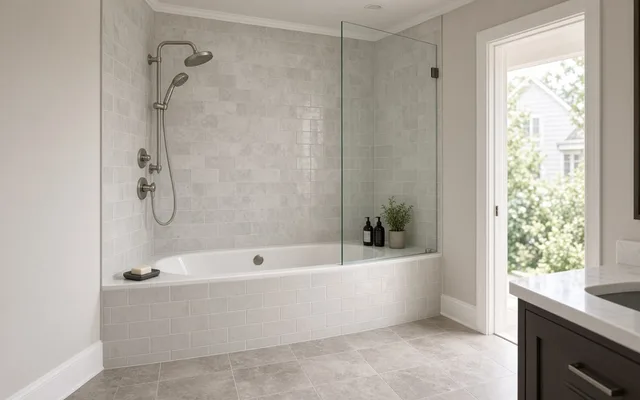 Service guideTub & Shower Conversions
A tub-to-shower conversion removes the bathtub and builds a shower in its alcove, usually with a new drain, a rebuilt substrate, a waterproofing membrane, new walls and an enclosure.
 Service guideAccessible Bathroom Remodeling
Accessible bathroom remodeling plans the room around a specific person's transfers, reach, mobility aid and likely future needs: turning space, a curbless shower, blocking and grab bars, a comfort-height toilet, a reachable vanity, nonslip surfaces and a wider door.
Tell us the size, the condition of what is there now, and what you want to change. Bath Project Notes passes your request to independent local professionals, who reply with written, no-obligation estimates. The service is free to use.