How many written proposals will you collect?
No votes yet. Yours will be the first. · saved on this device
Loading...
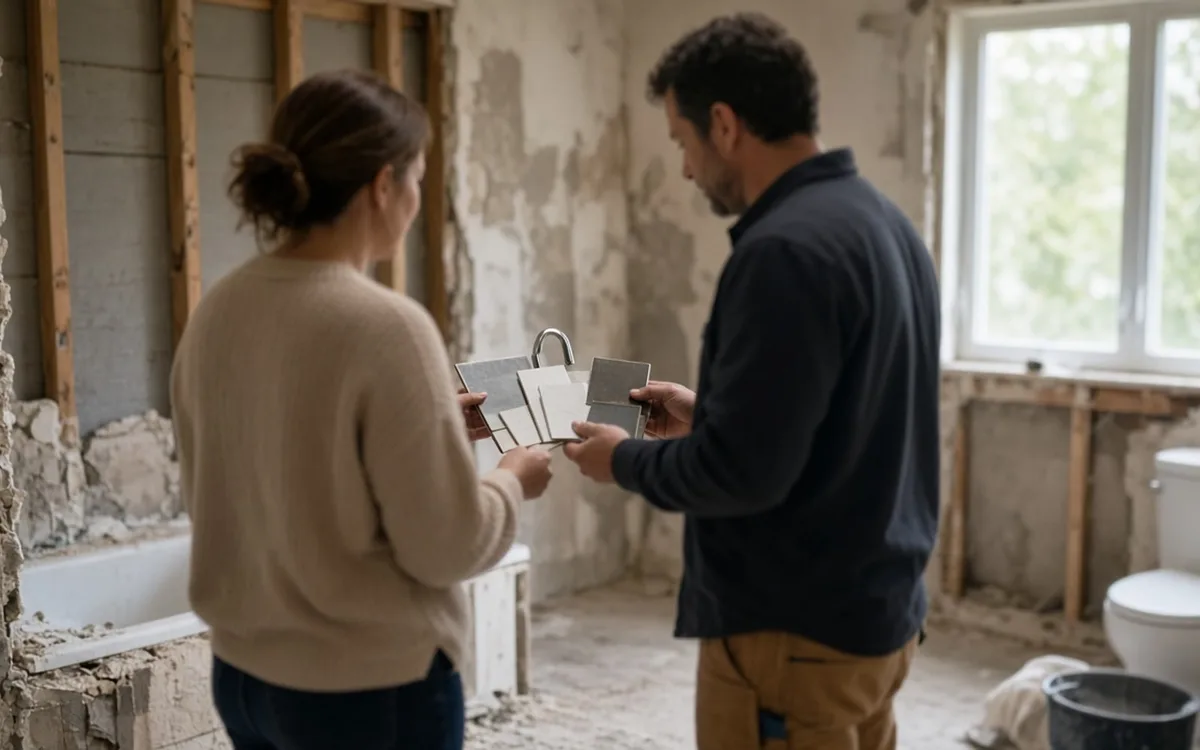
Bath Project Notes · Free estimate
Describe the bathroom once, clearly, and independent local professionals will respond with a free written proposal. Include dimensions, photos, the fixtures you keep and change, any leak or mold history, who uses the room and what must improve for them, and whether another bathroom exists. There is no obligation, and the better the brief, the more comparable the proposals.
A bathroom brief has two parts most homeowners leave out: the water history and the people. A pro who knows the ceiling below stained once, or that the room is for a parent who transfers from the left, prices a different job than one who sees only a photo of dated tile. This page lists what to send, the questions to ask when proposals arrive, and how to compare them.
If scope is still open, spend ten minutes on the quiz or the services hub first. A request that says 'update the bathroom' invites a full-renovation price; one that says 'convert the tub to a curbless shower, keep the vanity and floor, add a ducted fan' invites the number you want.
Start with the room: length, width, ceiling height, and where the door, window, toilet, vanity and tub or shower sit. Add photos from the door and from each corner, plus one of the ceiling below if the bathroom is upstairs. List fixtures with model numbers if known and mark each keep or replace. Describe any leak, stain, soft floor or mold, and whether the fan ducts outside. Say who uses the room and what they struggle with. Give a target range.
Add the constraints: whether another bathroom exists, whether the house is on a slab, whether an HOA or condo board must approve, and how long the household can manage without the room. Our analysis of the EIA's 2024 household survey found 38.6% of occupied homes have exactly one full bathroom, though 30.3% have at least a half bath to fall back on, so say which applies. Houzz found 84% of bathroom renovators hired a pro and 45% a general contractor; the ones whose proposals lined up were the ones who described the water and the users, not just the tile.
Four questions sort bathroom proposals fast. Which waterproofing system will the shower use, and will it be flood-tested before tile? Which fixtures and finishes are fixed-price and which are allowances? What happens, and what does it cost, if the subfloor or framing under the tub is damaged? How will the household use a toilet and shower during the work? A pro who answers all four in writing is showing you how they build.
Then ask about process: who pulls permits, when the rough-in inspection happens, how change orders are approved, the payment schedule, and who is on site each day. The reviews guide covers what to verify about a pro's history. Ask each pro the same questions so the answers can be compared.
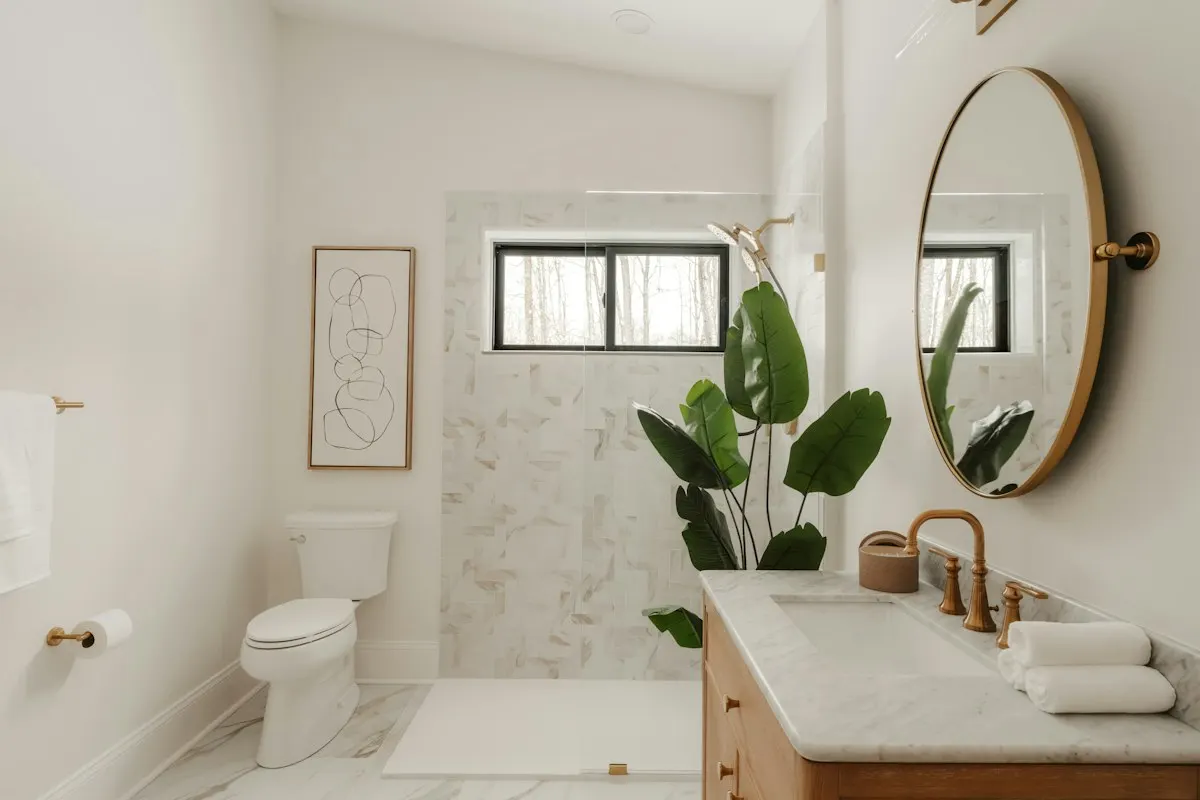
Build a table with a row per line: demolition, plumbing rough-in and trim, shower base and membrane, tile by area, glass, vanity and top, toilet, electrical and fan, floor, paint, permits, allowances, contingency. Blank cells are exclusions, and exclusions are where a low total hides. Match fixture models across bids; a $180 valve and a $600 thermostatic valve are different products. Match glass type and thickness. Confirm each proposal states the same shower size and tile square footage.
Houzz found 37% of renovators overspent in 2025, and NAR reports 54% of remodelers used home equity, which takes weeks to arrange; ask how long each price holds and when a deposit locks the vanity and tile orders. The calculator is a sanity check on totals. Then ask both pros to explain any gap line by line.
Independent professionals who serve your area and handle your scope receive the brief and contact you directly, usually within a few business days. Expect a site visit before a written proposal; a serious price for a shower requires seeing the floor, the drain and the ceiling below. Meet more than one. Collect proposals, compare them as above, and decide. No one is obligated at any point, and the site takes no part in the contract or payment.
If you are early, say so; many pros will give a range for a scope from photos so you can decide whether to proceed. Most bathroom renovators do bring in help: Houzz's 2025 study found 84% hired at least one professional and 20% hired a bathroom remodeling specialist. The polls show how many proposals other homeowners are collecting and how one-bathroom households are planning the outage. A photo range is not a proposal, but it tells you whether the scope and the budget belong together before anyone drives out.
Homeowner polls
No votes yet. Yours will be the first. · saved on this device
No votes yet. Yours will be the first. · saved on this device
No. Dimensions, photos and a description of what stays and changes let a pro give a range and decide whether a site visit makes sense. For an accessible remodel, an occupational therapist's or designer's dimensioned plan makes proposals far more comparable, but it can follow the first conversation.
Three written proposals built on the same brief is the practical standard. Fewer than two leaves no comparison; more than four takes weeks of visits and rarely changes the decision. If three come back far apart, the brief was unclear or one pro misread the scope, so ask before assuming the low bid is the bargain.
Yes, in detail. A stain on the ceiling below, a soft spot at the tub, or a musty smell tells the pro to price subfloor and framing repair as a likely item rather than a surprise. Hiding it does not save money; it moves the cost into a change order after demolition, when you have no leverage.
For anything beyond swapping a faucet or toilet, yes. A pro needs to see the floor, the drain location, the ceiling below, the fan duct and the wall condition. Many will give a photo-based range first so you can screen before scheduling visits, which saves time for everyone.
Yes, as a range. A pro who knows you are planning $15,000 to $20,000 will propose a shower assembly and fixture grade that fit, and will say plainly if a curbless tiled shower with frameless glass cannot be done for that. Hiding the number produces proposals that miss in both directions.
Typically one to three weeks from request to written proposal: a few days for responses, a week to schedule visits, and several days for pricing tile, vanity and glass with suppliers. Accessible remodels with an assessment take longer. Vanity and glass lead times start only after signing, so plan the calendar accordingly.
No. Requesting estimates carries no obligation and no fee. You may collect proposals and decide not to proceed, postpone, or hire someone found elsewhere. Pros understand this; a clear no with a short reason keeps the relationship useful if you return later.
 Service guideComplete Bathroom Renovation
A complete bathroom renovation rebuilds the bathing area, vanity, toilet, floor, wall finishes, lighting and ventilation together, and may move drains, walls or the door.
 Service guideWalk-In Shower Installation
A walk-in shower installation rebuilds the bathing area from the subfloor up: a sloped base, a drain bonded to a waterproofing membrane, wall board and membrane, a valve, tile or panels, and an enclosure with a defined entry.
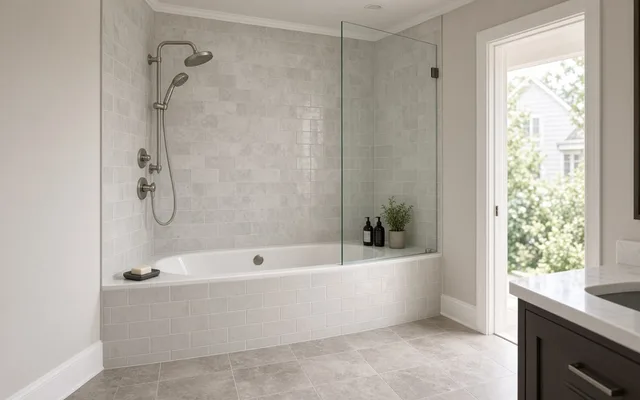 Service guideTub & Shower Conversions
A tub-to-shower conversion removes the bathtub and builds a shower in its alcove, usually with a new drain, a rebuilt substrate, a waterproofing membrane, new walls and an enclosure.
 Service guideAccessible Bathroom Remodeling
Accessible bathroom remodeling plans the room around a specific person's transfers, reach, mobility aid and likely future needs: turning space, a curbless shower, blocking and grab bars, a comfort-height toilet, a reachable vanity, nonslip surfaces and a wider door.