Which bathroom scope are you leaning toward?
Houzz found 75% of bathroom renovators upgraded the shower and 27% the tub.
No votes yet. Yours will be the first. · saved on this device
Loading...
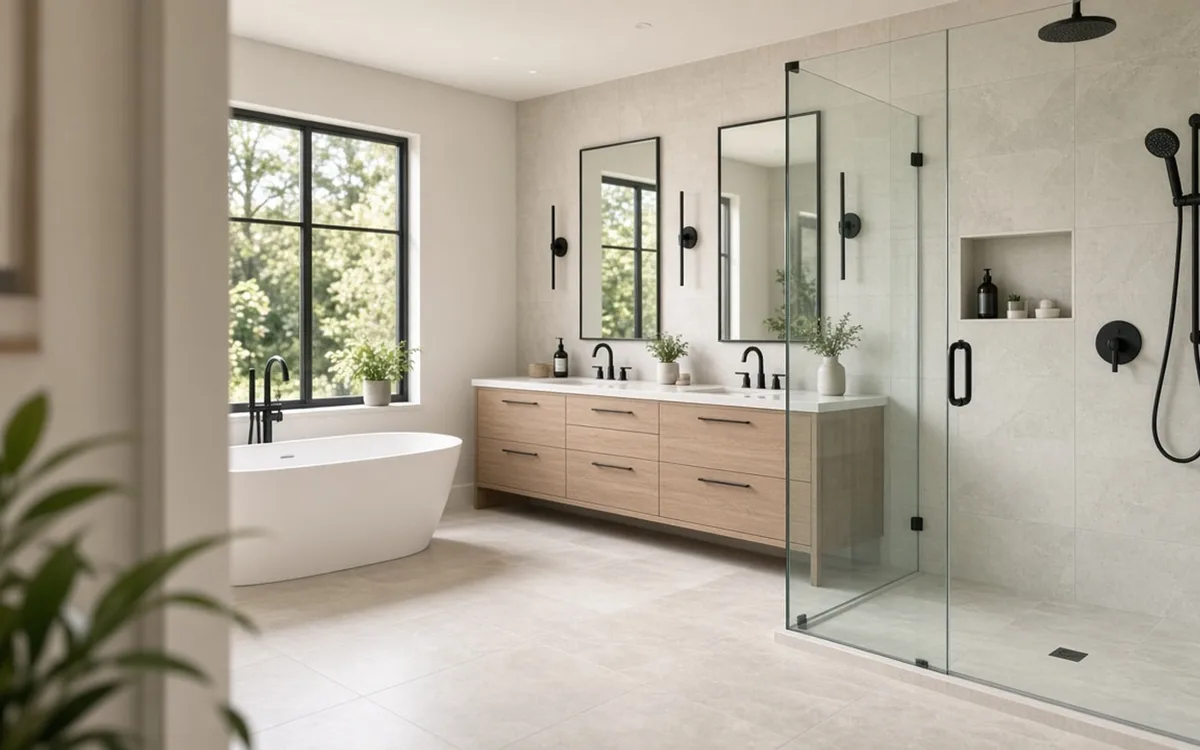
A bathroom that is easier to use and easier to care for.
Bath Project Notes is a planning resource for U.S. homeowners deciding between a shower conversion, a walk-in shower, an accessibility remodel and a full renovation. It explains what sits behind the tile, what each scope costs and why, and how to compare written proposals. When you are ready, it connects you with independent local professionals for a free written estimate, with no obligation.
By the numbers
Every figure links to its published source.
$12,151
average bathroom remodel per HomeAdvisor, with a $6,651 to $17,657 typical range
From more than 10,000 surveyed customers, HomeAdvisor puts a half bath at $1,500 to $15,000, a full bath at $3,500 to $20,000 and a primary bathroom at $7,000 to $30,000. Fixture relocation and concealed damage push a specific bath outside those brackets.
HomeAdvisor / Bathroom Remodel Cost Guide (2025)$22,000
median spend on a major bathroom remodel among Houzz renovators (2024 projects)
Major bathroom remodels in Houzz's 2025 study carried a $22,000 median, rising to $25,000 for rooms of 100 square feet or more. A major remodel typically replaces the shower or tub, vanity, floor and wall finishes together.
Houzz / 2025 U.S. Houzz Bathroom Trends Study (2025)80%
of cost recouped at resale by a midrange bathroom remodel (2025 Cost vs. Value)
The 2025 Cost vs. Value Report (Zonda/JLC) shows a midrange 5-by-7-foot bathroom remodel recouping roughly 80% of its cost at resale, its strongest showing in nearly twenty years, versus 36% for an upscale remodel and about 61% for a universal-design bath.
This Old House citing 2025 Cost vs. Value Report (2025)52%
of Houzz bathroom renovators enlarged the shower; 18% grew it by more than half
Houzz found 46% kept shower dimensions, 20% enlarged by under 25%, 14% by 25 to 50% and 18% by more than 50%; only 2% shrank the shower. Enlarging usually means moving a wall or removing a tub, which is where waterproofing and framing scope grows.
Houzz / 2025 U.S. Houzz Bathroom Trends Study (2025)Bathrooms fail from the inside. The tile looks fine for years while water works through a grout line, past a liner with no slope, and into the subfloor. By the time it shows, the fix is a rebuild. That is why this site starts every scope with the assembly behind the finish: the membrane, the slope, the drain, the fan. Choosing tile is the easy part and it comes last.
The second thing a bathroom has to do is fit the people who use it, today and in ten years. Houzz's 2025 bathroom study found 68% of renovators considered current or future special needs and 47% designed for needs five or more years out, and AARP found 75% of adults over 50 want to stay in their home. A curbless shower, blocking for grab bars and a comfort-height toilet cost little during a remodel and a great deal afterward. Use the service pages to see what each scope includes and the calculator to size a budget.
Bath Project Notes ran these numbers on the federal government's own household data. You won't find them in a contractor's brochure.
Bath Project Notes analysis · 2024
95% interval 35.3%–38.0% · about 19.6 million homes · 7,124 survey households
95% interval 6.2%–7.8% · about 2.5 million homes · 4,841 survey households
Difference: 29.7 percentage points (95% interval 27.9 to 31.4).
Older homes are much more likely to have a single full bathroom. That is why a second bath is one of the most common additions in pre-1990 houses, and why plumbing access decides the price.
Source: Bath Project Notes analysis of 2024 federal household survey data from the U.S. Energy Information Administration. How we calculated it
Each guide covers what it costs, what fails first, and how to compare written proposals.
 Service guideComplete Bathroom Renovation
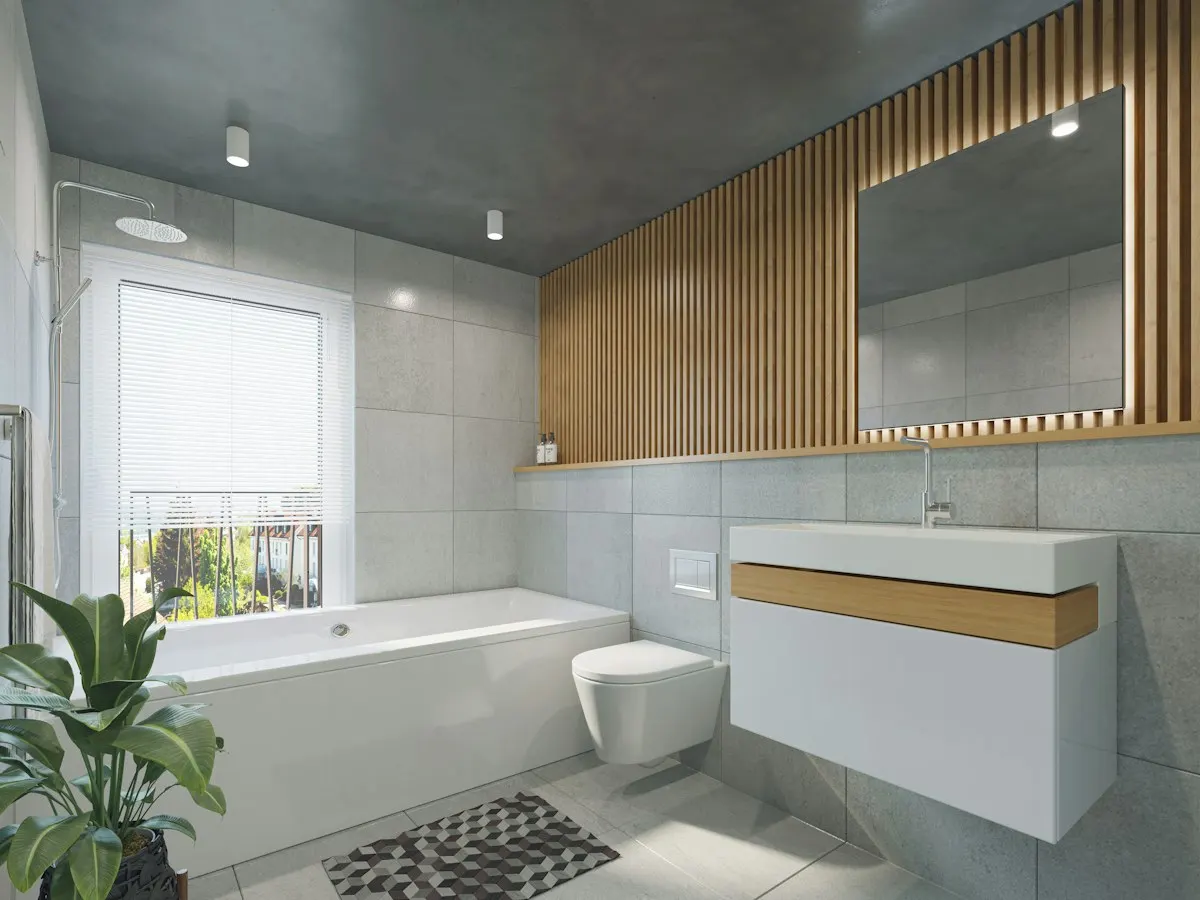
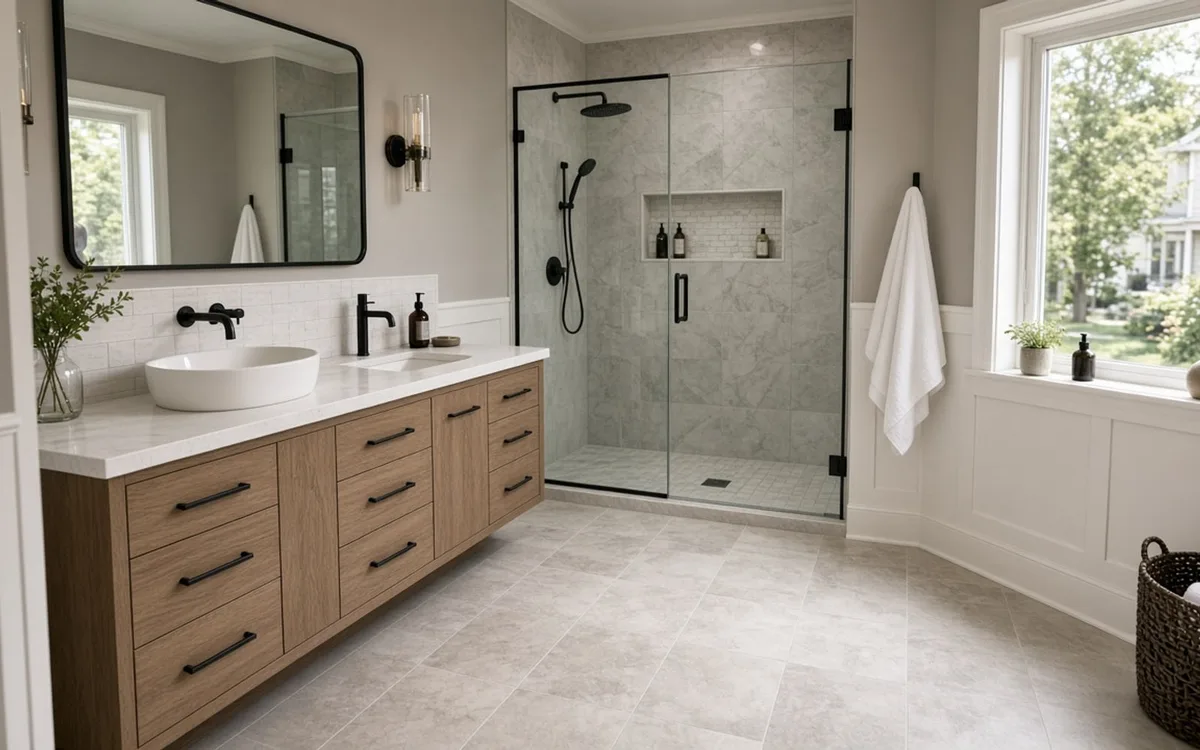
A complete bathroom renovation rebuilds the bathing area, vanity, toilet, floor, wall finishes, lighting and ventilation together, and may move drains, walls or the door.
 Service guideWalk-In Shower Installation
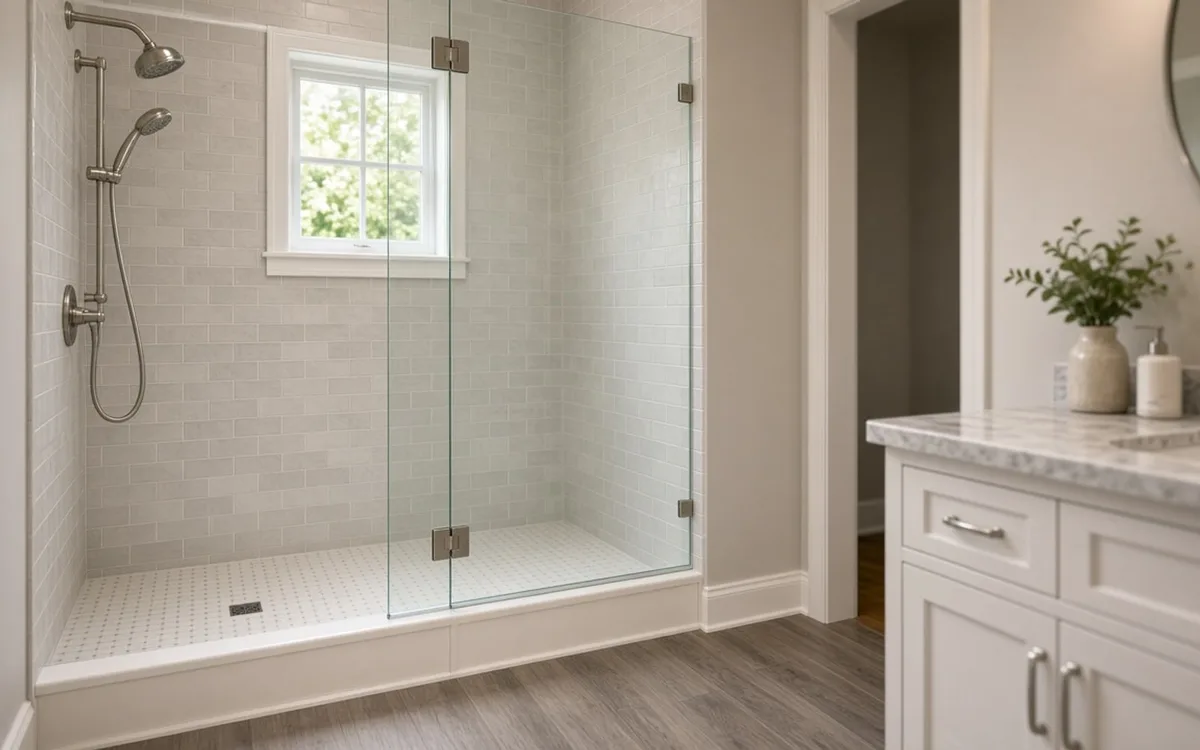
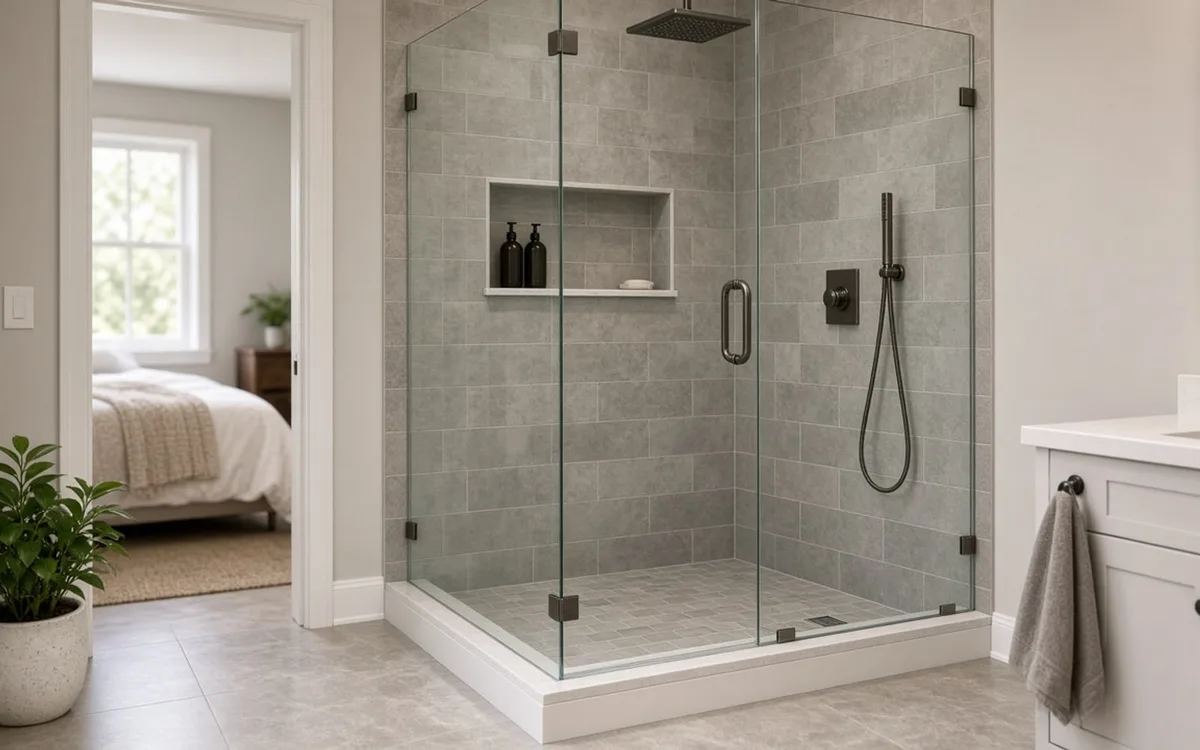
A walk-in shower installation rebuilds the bathing area from the subfloor up: a sloped base, a drain bonded to a waterproofing membrane, wall board and membrane, a valve, tile or panels, and an enclosure with a defined entry.
 Service guideTub & Shower Conversions
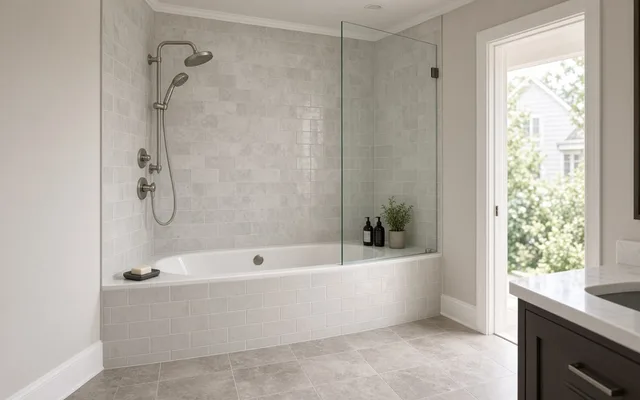
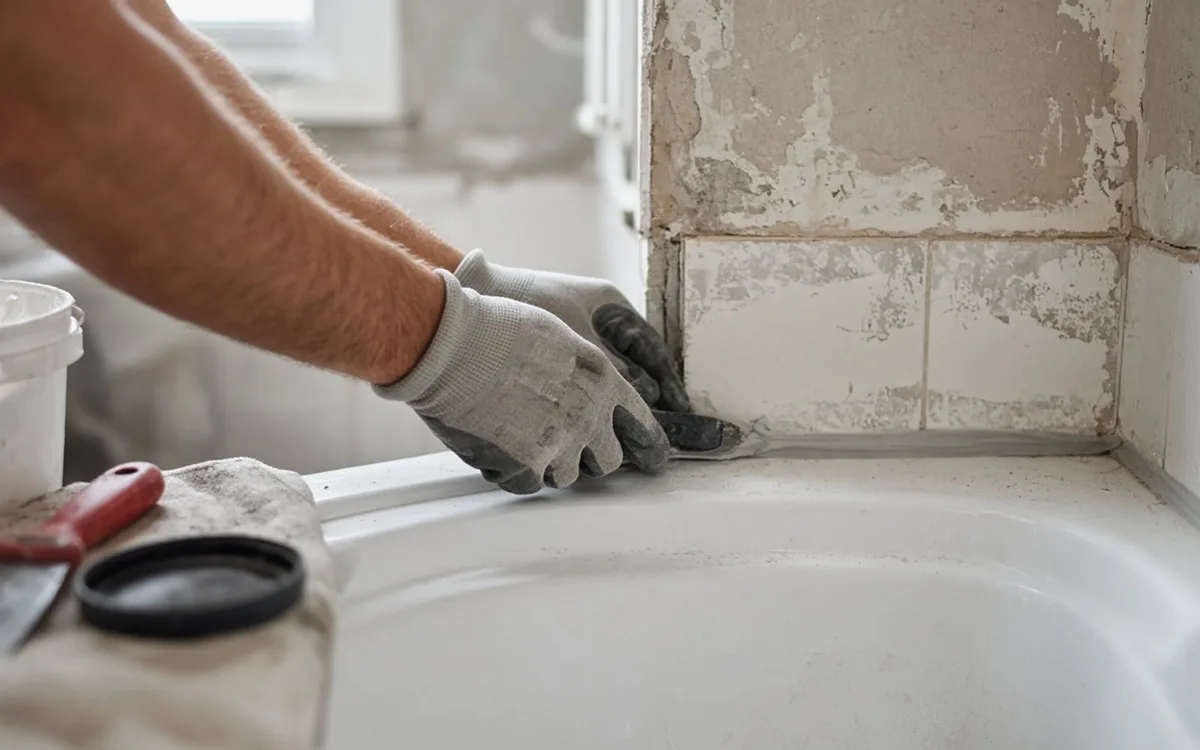
A tub-to-shower conversion removes the bathtub and builds a shower in its alcove, usually with a new drain, a rebuilt substrate, a waterproofing membrane, new walls and an enclosure.
 Service guideAccessible Bathroom Remodeling
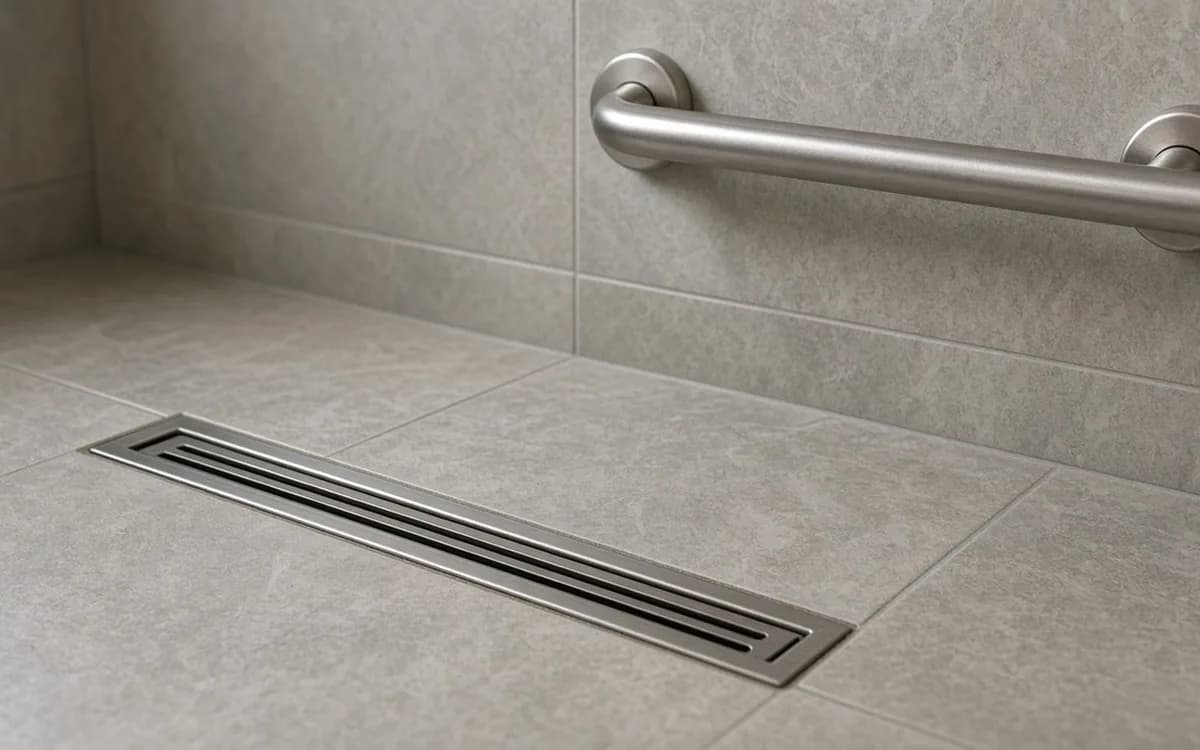
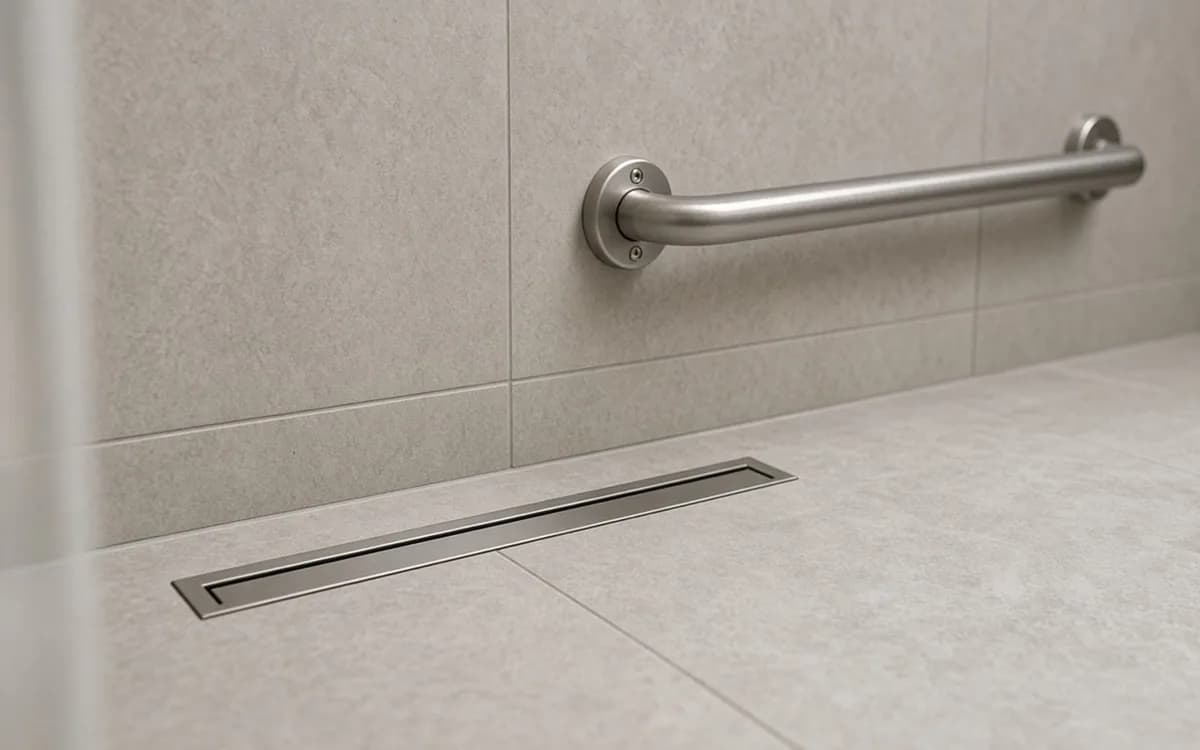
Accessible bathroom remodeling plans the room around a specific person's transfers, reach, mobility aid and likely future needs: turning space, a curbless shower, blocking and grab bars, a comfort-height toilet, a reachable vanity, nonslip surfaces and a wider door.
The published benchmarks agree on the shape of the range and differ on the center. HomeAdvisor's surveyed customers average $12,151 with a typical span of $6,651 to $17,657; Angi reports a $6,648 to $17,646 range; This Old House's 2026 pricing averages $15,586. Houzz's 2025 bathroom study puts the median across all bathroom remodels at $13,000 and a major remodel at $22,000; its 2026 study puts a major remodel of a primary bath over 100 square feet at $30,000. The 2026 cost guide breaks those down by room size and by line item.
Labor is the reason a small room costs so much: HomeAdvisor puts it at 40% to 65% of the bill, because tile, plumbing and electrical are all hand work in a space where two trades cannot stand at once. The room's size matters less than how much of it is wet area and whether any drain moves. Enter your square footage in the calculator and then adjust for those two things.
| Scope | Typical 2025–2026 range | What drives it |
|---|---|---|
| Fixture and finish refresh, same layout | $5,000 – $12,000 | Vanity, toilet, faucet, floor, paint; shower untouched |
| Tub-to-shower conversion | $4,000 – $15,000 | Prefab vs tiled, drain change, glass |
| Full renovation, same layout | $9,000 – $28,000 | Prefab or tiled shower, new vanity, floor, fan, lighting |
| Full renovation with layout change or expansion | $22,000 – $50,000+ | Moving drains, walls, curbless entry, custom glass |
Start from the complaint. If getting over the tub wall is the issue, a tub-to-shower conversion solves it, and Houzz found 82% of renovators who removed a tub enlarged the shower. If the shower is the right size but leaks, dates or lacks a proper entry, a walk-in shower rebuilt on a new membrane is the scope. If the fixtures are wrong for the person using them, accessible remodeling plans around that person. If the layout, storage, ventilation and finishes all need to change, a complete renovation puts them under one plan.
Scopes nest, and the smaller ones can be the wrong economy. A conversion that reuses a failing drain or a shower rebuilt without a fan will be back on the list in five years. Every service page lists the condition checks a pro should make before quoting, and the quiz sorts the complaints into a scope.
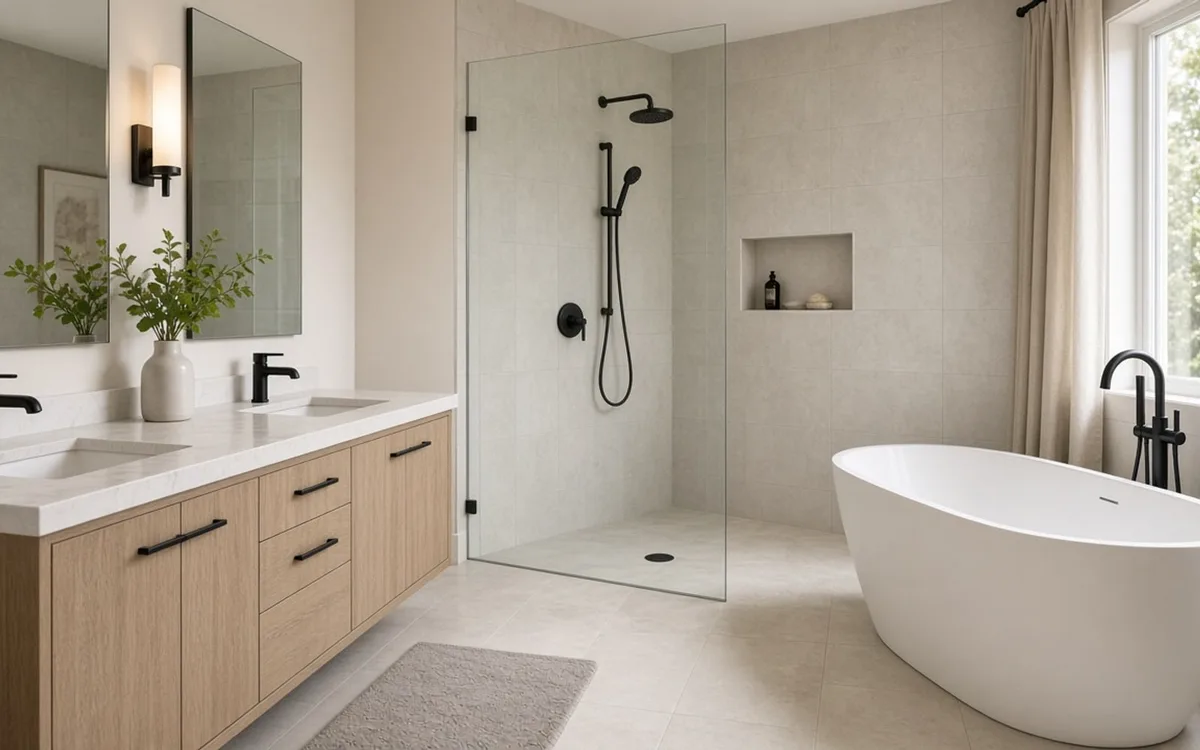
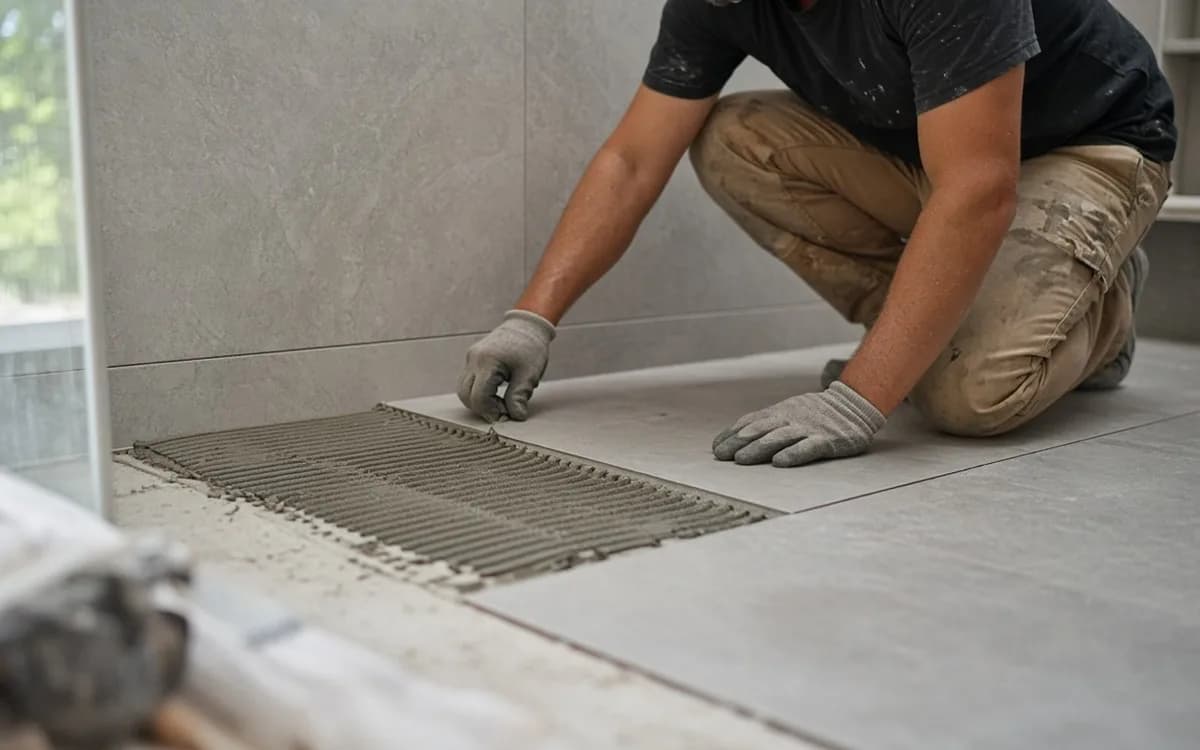
A tiled shower that lasts is a system: a sloped base or pre-slope, a waterproofing membrane rated for the job, a drain that bonds to that membrane, backer board or foam board on the walls, a membrane over that too, and only then tile and grout. Each layer is labor. A prefabricated acrylic base and wall surround skips most of it, which is why a conversion can be $4,000 with a surround and $15,000 with tile and glass. Neither is wrong; they are different assemblies with different lifespans and looks.
Proposals should name the system. A pro who writes 'waterproofed and tiled' has told you nothing; one who writes 'bonded sheet membrane, linear drain, 24-hour flood test before tile' has told you how it will be built. The walk-in shower page explains the assemblies in enough detail to ask the right questions.
This Old House's homeowner survey found 2 in 3 bathroom remodels finish in one to four weeks, and about one in five run past a month. The fast ones are same-layout jobs with in-stock fixtures; the slow ones wait on custom glass (two to three weeks after the tile is done), custom vanities, or a drain relocation that needs a rough-in inspection. Tile adds its own clock: thinset and grout cure before the shower can be used.
Our analysis of the federal government's 2024 household survey found 38.6% of occupied homes have exactly one full bathroom, and house age divides them: 36.6% of owner-occupied homes built before 1990 have only one, against 7.0% of homes built since, a 29.7 points gap. If that is your house, the schedule matters more than the price. Ask each pro whether the toilet can be reset nightly, how many days the shower is unusable, and whether they will sequence the work so the room is functional between phases. The polls show how other one-bath households are handling it.
The shower is getting bigger and the tub is going. Houzz found 52% of renovators enlarged the shower, low-curb entries led at 44% with curbless at 20%, and NKBA reports 53% of designers are removing tubs to make showers larger. Among the third of renovators who did upgrade a tub, 45% chose a freestanding flat-bottom model. Vanities skew custom: 55% chose custom or semi-custom, mostly wood, and engineered quartz tops lead at 45%.
Buyers are more conservative than renovators. NAHB's 2024 survey found 78% of buyers want both a shower and a tub in the primary bath. The practical rule is to keep at least one tub in the house. The compare page weighs tub-versus-shower, curbless-versus-curb and tile-versus-panels with those figures in the table.
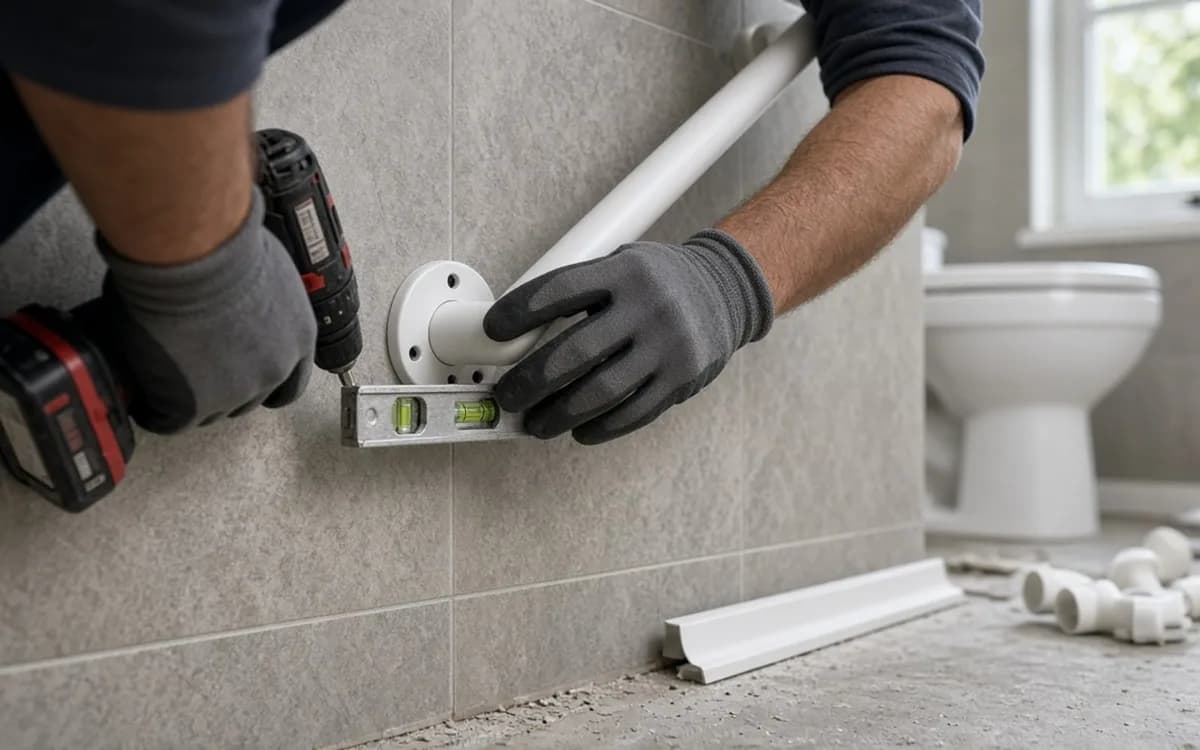
Skipping the membrane, or trusting the tile to be it. Building a curbless shower without recessing the floor, so water runs into the room. Venting the fan into the attic. Placing grab bars into drywall with no blocking. Choosing a shower valve after the wall is closed, so the trim does not fit the rough-in. Ordering glass before tile is finished, so the panel is a quarter-inch off. Each of these is common, each is cheap to prevent, and each is expensive to reverse.
The budget version of the mistake is scope creep once the walls are open. Houzz found 37% of renovators went over budget in 2025, mostly through upgraded materials and expanded scope, and the same study put the median primary bathroom at $15,000 in 2025. Bathrooms add a third reason: water damage found under the old tub. Hold 15 percent in reserve for a bathroom rather than 10, and write unit prices for subfloor and framing repair into the contract.
In 2025, more than usual. The Cost vs. Value Report shows a midrange bathroom remodel recouping about 80% of its cost at resale, its strongest showing in nearly twenty years, while an upscale remodel returned 36% and a universal-design bath about 61%. NAR's 2025 report, using Realtor estimates, is more conservative at 50%, and found 35% of Realtors saw the biggest jump in buyer demand in bathroom renovations.
The pattern is consistent across both: a mid-priced bathroom matched to the house recovers most of its cost, and money spent on the assembly behind the wall recovers more than money spent on a steam generator. Remodel for how the room is used, and treat resale as the floor. Neither figure is a promise about your market.
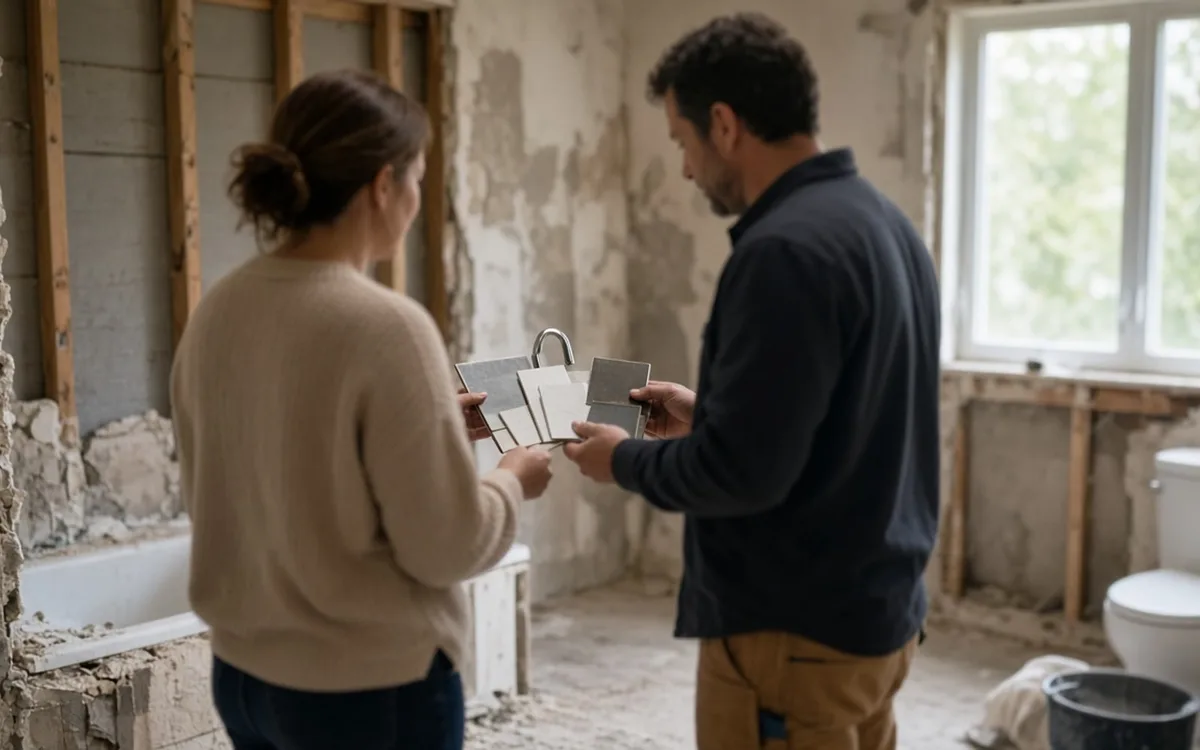
Send each pro the same brief: room dimensions, photos, the fixtures you keep and change, any leak or mold history, who uses the room and what must improve for them, and whether another bathroom exists. Ask for a written proposal that names the waterproofing system, the drain, the fixture schedule with model numbers, the fan and its duct route, allowances, and the process for damage found after demolition.
Houzz found 84% of bathroom renovators hired at least one professional and 45% hired a general contractor; waterproofing is the usual reason. Three proposals built on one brief will differ; that is the point. The contact page lists what to include and the four questions that sort proposals fastest, and the locations hub carries the regional notes on housing age, drains and humidity.
Homeowner polls
Vote to see live results from other homeowners planning the same project.
Houzz found 75% of bathroom renovators upgraded the shower and 27% the tub.
No votes yet. Yours will be the first. · saved on this device
No votes yet. Yours will be the first. · saved on this device
Angi's typical range is $6,648 to $17,646; Houzz's major-remodel median is $22,000.
No votes yet. Yours will be the first. · saved on this device
 Free toolBathroom remodel cost calculator
Size, material tier and complexity in, a realistic budget range out.
 Free toolBathroom comparisons: the five decisions that change the assembly
Side-by-side tables for the decisions that change the price most.
 Free toolBathroom remodel quiz: find your scope and check the numbers
10 questions that show what you already know and what to check next.
 Free toolBathroom remodel polls: see what other homeowners are choosing
See what other planners chose and add your vote.
A same-layout renovation runs $9,000 to $16,000 with a prefab shower and $14,000 to $28,000 with a tiled shower and glass. Published figures sit inside that band: HomeAdvisor averages $12,151, This Old House $15,586, and Houzz's major-remodel median is $22,000. A fixture refresh without touching the shower runs $5,000 to $12,000; moving drains or walls takes a project to $22,000 or more.
Because nearly everything in a bathroom is installed by hand in a small space: tile set piece by piece, plumbing roughed and trimmed, electrical run for the fan, lighting and outlets, glass measured and hung. HomeAdvisor puts labor at 40% to 65% of the bill. Materials for a 50-square-foot bath are modest; the hours are not.
No. Tile and grout shed most water but absorb some and let it through at every joint. The waterproofing is a membrane behind or under the tile, bonded to the drain, that carries water to the drain. A shower without that layer will leak eventually regardless of how well the tile is set. Ask which membrane system the proposal specifies.
On a same-layout job, usually one to three weeks. Demolition and rough-in take a few days, membrane and flood test a day or two, tile several days plus cure time, and glass two to three weeks after tile if it is custom. Ask the pro whether a temporary curtain rod can make the shower usable while the glass is on order.
If it is not the only tub in the house and no one uses it, yes; 82% of Houzz renovators who removed a tub enlarged the shower and 53% of NKBA designers are doing the same. If it is the only tub, NAHB found 78% of buyers want both a tub and a shower in the primary bath, so keep it or plan a tub elsewhere.
Replacing fixtures in place often does not require one. Moving a drain, adding or moving circuits, changing a wall, or installing a new exhaust duct almost always does, and the rough-in inspection is your check that the membrane and plumbing were done before they were covered. A pro who suggests skipping permits on that work is a signal.
Blocking in the walls for future grab bars, a handheld shower on a slide bar, a comfort-height toilet, nonslip floor tile, and a curbless or low-curb entry if the floor structure allows. Each costs little during construction. Houzz found 47% of bathroom renovators planned for needs five or more years out.
Finalize every fixture and tile choice before demolition and order the vanity and glass early. Write unit prices for subfloor and framing repair into the contract so water damage under the old tub is a known cost, not a negotiation. Hold 15 percent in reserve. Houzz found 37% of renovators overspent in 2025.
 LocationsRegional planning notes
How climate, codes and prices change a project across U.S. regions.
 ArticlesPlanning articles
Cost guides, checklists and mistakes to avoid before you sign.
 ReviewsHow to read reviews
What genuine contractor reviews look like and what they leave out.
Tell us the size, the condition of what is there now, and what you want to change. Bath Project Notes passes your request to independent local professionals, who reply with written, no-obligation estimates. The service is free to use.