Which bathroom scope are you leaning toward?
Houzz found 75% of bathroom renovators upgraded the shower and 27% the tub.
No votes yet. Yours will be the first. · saved on this device
Loading...
Bath Project Notes · Fixture and finish refresh vs Full renovation
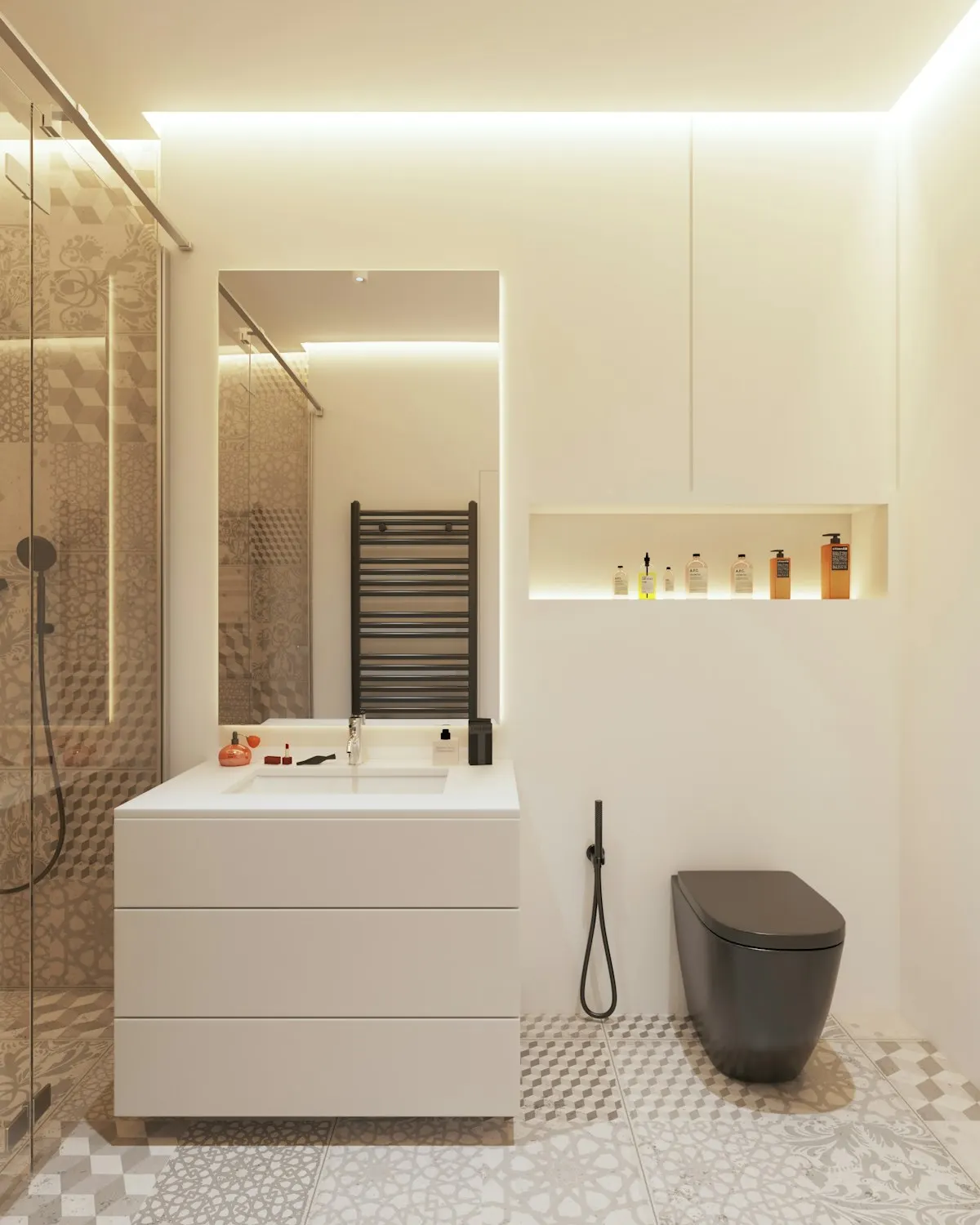
Refresh when the shower assembly is sound and under ten years old, the fan ducts outdoors, and the complaint is dated finishes; a refresh of vanity, toilet, faucet, lighting, floor and paint runs $5,000 to $12,000 and takes about a week. Renovate when the shower is failing, the fan vents into the attic, the layout wastes space or the floor must come up. The assembly's condition, not the finishes, is the test.
Photo: Bilal Mansuri · License.
Most homeowners arrive at this comparison wanting the refresh and fearing they need the renovation. The comparison table gives the cost, timeline and resale rows; this page is about the test that decides it, which is a physical inspection of the shower and the fan, and about the cost of guessing wrong in either direction. A refresh on top of a failing shower is money spent twice; a renovation of a sound bathroom is money spent once when half would have done.
The published spending data shows both happening. Houzz's 2025 Bathroom Trends Study reports a $13,000 median across all bathroom remodels and $22,000 for major ones; the gap between them is roughly this decision. Houzz's feature findings show faucets, lighting and flooring as the most-upgraded items, at 87%, 82% and 81%, which is the refresh list, while 75% upgraded the shower.
A refresh replaces the vanity, toilet, faucet, lighting, floor and paint while the shower stays; a full renovation opens the wet walls and floor and rebuilds everything. The decision is the shower assembly's condition and the fan, not the finishes.
| Factor | Fixture and finish refresh | Full renovation |
|---|---|---|
| Upfront cost | $5,000 – $12,000 | $12,000 – $50,000+ |
| Lifespan | Shower keeps its remaining life | 20–30 yrs for the whole room |
| Maintenance | Unchanged for the shower | New grout, glass, fan |
| Appearance | New everything except the shower | Fully new |
| Climate fit | Weak if the fan is wrong | Fan and duct corrected |
| Install time | 3–7 days | 2–5 weeks plus glass |
| Resale / ROI | Cost-effective in a sound bath | ~80% midrange recoup (Cost vs. Value 2025) |
| Best for | Sound shower under 10 yrs, working fan, dated finishes | Failing shower, attic-vented fan, layout waste, floor replacement |
The refresh wins when the shower assembly is sound: no soft floor, no stains below, intact grout, a pan under ten years old, and a fan that ducts outside. Houzz found faucets (87%), lighting (82%) and flooring (81%) were the most-upgraded items; a refresh hits all three. It loses when it puts a new floor around a shower that will be rebuilt in three years.
The renovation wins when the shower leaks, the fan vents into the attic, the floor is coming up anyway, or the layout wastes the room. Houzz's major-remodel median of $22,000 and the Cost vs. Value midrange recoup of about 80% describe this path. The renovation page lists what to check before choosing.
Start in the shower. Press firmly on the tile in the lowest two courses on each wall and around the valve; any give means a wet substrate. Look at the grout for cracks that have been repaired and reopened, at the caulk line where the wall meets the base or tub for black staining, and at the ceiling below if there is one. Run the shower for ten minutes and check the base for flex and the drain for slow flow. Ask when the shower was built; a tiled shower over fifteen years old on a traditional liner is near the end of its expected life whatever it looks like.
Then check the fan. With the door closed and the fan running, a tissue should hold against the grille; go into the attic, or look at the roof or wall, and find where the duct terminates. A fan that ducts into the attic or has no duct is a code correction that requires opening the ceiling, at which point the refresh has become something else. If the shower is sound and the fan ducts outdoors, refresh; if either fails, the renovation page describes the larger scope.
A refresh runs $5,000 to $12,000: vanity and top, toilet, faucet, lighting, mirror, floor, paint and accessories, with the shower closed. It takes three to seven days and needs no permit in many jurisdictions if nothing concealed changes, though a new floor over a repaired subfloor or any electrical work may need one. A full renovation runs $9,000 to $50,000 or more, takes two to five weeks plus glass, and always involves permits. HomeAdvisor's $12,151 average sits between the two paths. Houzz's 2025 study put major bathroom remodels at a $22,000 median, which reflects the renovation's wider scope.
Over ten years, the refresh's risk is the shower. If it fails in year four, the shower rebuild costs $7,000 to $18,000 and disturbs the new floor and often the new vanity, so the refresh's floor and paint are partly lost. If the shower lasts the decade, the refresh was the right call and the renovation was deferred at no cost. The renovation's risk is only that it was unnecessary. The honest way to price the refresh is to add the probability-weighted cost of an early shower failure, which is why the inspection matters more than the quote.
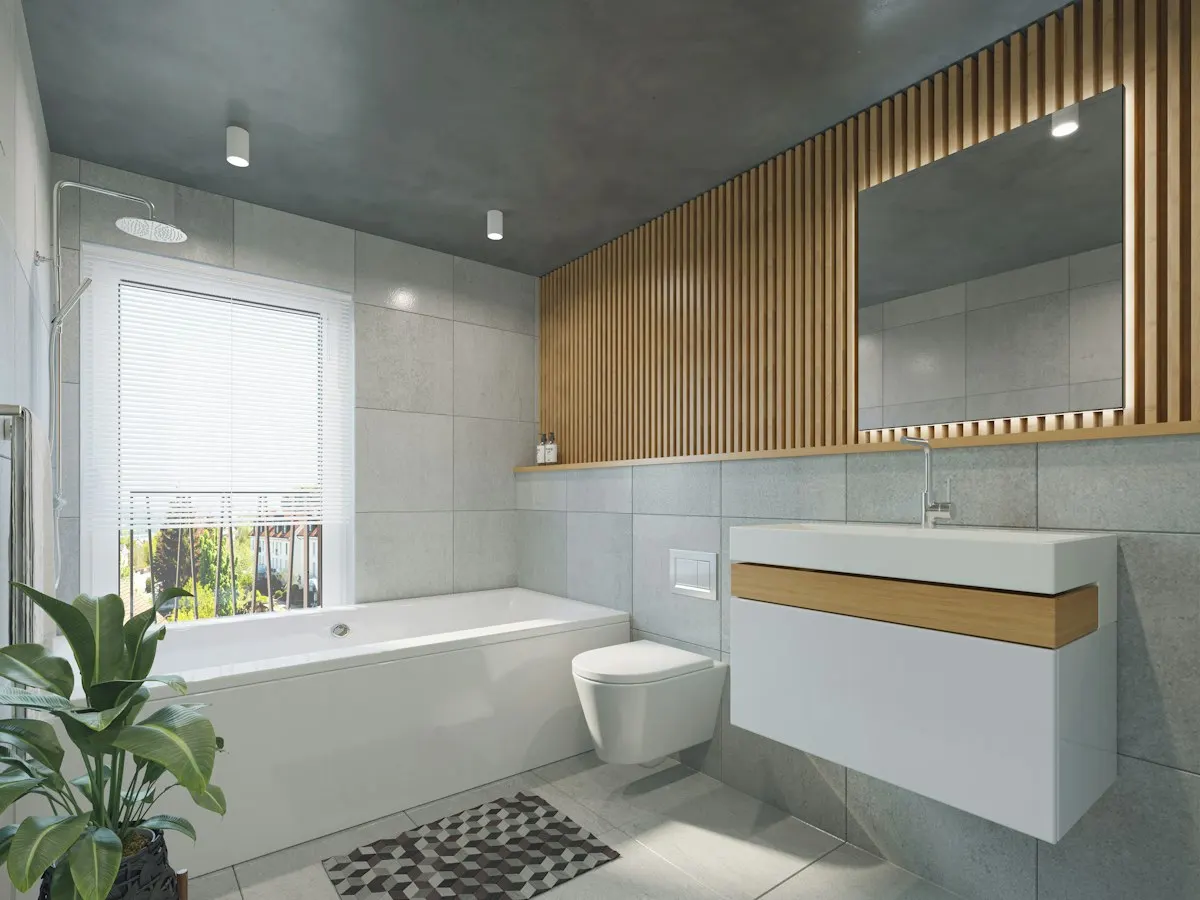
Three situations. First, when the shower is sound but the tub surround is not, and the household is already considering a tub-to-shower conversion; doing the refresh now and the conversion in two years means removing new floor tile at the alcove and repainting. Second, when the fan is the problem and the ceiling has to open anyway; once the ceiling is open, the marginal cost of new lighting, a new circuit for a heated floor and a proper duct is low, and the refresh has become a partial renovation. Third, when the floor comes up and the toilet flange, subfloor or drain turns out to need work.
The reverse false economy is rarer but real: a full renovation of a sound bathroom because the finishes were tired, with a good shower demolished to get a new one that looks similar. If the shower is under ten years old, tiled on a bonded membrane, and the only complaint is the tile color, a refresh with new glass and regrouting keeps a twenty-year asset in place. The scope quiz asks the shower and fan questions directly and sorts the answer.
In humid regions, the fan test carries more weight, because a bathroom that has been under-ventilated for years often has moisture damage behind the shower that the inspection above would not find; a renovation that opens the wet walls is the way to know. In older housing, which the EIA's data suggests dominates in the Northeast where 56.1% of homes have a single full bath, galvanized supply lines and undersized drains push toward opening the walls once and fixing everything, rather than refreshing around them.
The household changes the timeline more than the scope. A refresh keeps the shower usable throughout, which is decisive in a one-bathroom house, the case for 38.6% of occupied homes by our analysis of the EIA's 2024 survey; a renovation takes it out for weeks. If the inspection says renovate and the house has one bathroom, the answer is not to refresh instead but to plan the renovation's schedule around the household, which the planning guide covers, or to phase the shower rebuild first and the finishes after, in that order.
The 2025 Cost vs. Value Report's midrange bathroom remodel, a full renovation of a 5-by-7 bath with a new tub-shower, vanity, toilet, floor and lighting, recoups about 80% at resale, its strongest showing in years, while the upscale version recoups far less. A refresh is not measured separately, but its logic is simple: in a bathroom with a sound shower, it delivers most of the visual change for less than half the money, so its percentage return is often higher even if its dollar contribution is smaller.
The NAR's 2025 Remodeling Impact Report puts bathroom renovation cost recovery at 50% and notes 35% of Realtors saw the largest buyer-demand increase in bathroom renovations. For a pre-sale project, a refresh of a sound bathroom is usually the better return; a renovation of a failing one is necessary rather than optional, because a buyer's inspector will find the shower and price it into the offer.
They are different scopes, so ask for both from the same pros with the same selections wherever they overlap: the same vanity, top, toilet, faucet, lighting and floor. The refresh bid should state what it assumes about the shower and the fan and what happens if the floor removal reveals a problem. The renovation bid should break out the shower assembly, glass and fan as separate lines so you can see exactly what the extra money buys. Ask each pro which they would do in your bathroom and why.
Then subtract. The renovation bid minus the refresh bid, minus the value of a new shower and fan you would otherwise buy later, is the real cost of renovating now. If that number is small and the shower is over ten years old, renovate. If it is large and the inspection passed, refresh. The calculator gives a range for the renovation; the estimate request lets you ask for both scopes in one brief.
Homeowner polls
Houzz found 75% of bathroom renovators upgraded the shower and 27% the tub.
No votes yet. Yours will be the first. · saved on this device
No votes yet. Yours will be the first. · saved on this device
No votes yet. Yours will be the first. · saved on this device
Press the floor at the drain and the curb for softness. Look at the ceiling below for stains. Check grout for cracks and missing sections and the corners for failed caulk. Look behind the valve trim for water marks. If the pan is more than fifteen years old and you do not know what is under it, assume it will need rebuilding within the decade.
Yes if the shower has a curb; the new floor meets the curb with a caulk joint. It is harder with a curbless shower because the floors are continuous. If the shower will be rebuilt within a few years, hold the floor until then; otherwise you pay for the entry tile twice.
Usually not, when fixtures are replaced in place without moving drains or circuits. Adding an outlet for a bidet seat or a new fan circuit may require an electrical permit. Anything that opens the wet wall or moves a drain does. Check with the local building department.
Glass, yes: a new frameless door on an existing sound shower is a common refresh item and changes the room more than any other single piece. Valve trim, yes, if the new trim fits the existing valve body; changing the valve body itself means opening the wall, which starts to look like a shower rebuild. Regrouting and resealing an existing tiled shower also belongs in a refresh and buys years.
Three to seven working days for a typical bathroom: a day for removal, a day or two for floor, a day for the vanity, toilet and faucet, a day for lighting and paint, and a day for trim and accessories. The shower stays usable throughout, though the toilet may be out for a day while the floor goes in. Vanity lead time is the usual schedule risk, so order it before the work starts.
It is a real fix for surface problems: stained, cracked or missing grout that lets water reach the substrate faster. It is cosmetic if the substrate is already wet, because new grout over a failed membrane hides the problem for a year. The inspection tells the difference. If the tile is firm, the base does not flex and there is no staining below, regrouting and resealing is a legitimate ten-year extension.
Ask a remodeler to remove one tile at the lowest course near the valve, or a section of the ceiling below, and look. The cost is small and the answer is definitive. A moisture meter on the wall outside the shower is another low-cost check. Deciding a $20,000 question on a hunch is the expensive option; a one-hour investigation is not.
Usually, and more per dollar than a renovation, provided the shower passes inspection. Buyers respond to a bright, clean, updated-looking bathroom, and a refresh delivers that. What it does not do is hide a failing shower from a buyer's inspector, so if the shower is the problem, either rebuild it or price the sale accordingly. Realtors consistently report bathroom updates as high on buyer interest lists.
Yes, if the floor is being replaced, since the mat goes under the new tile; it needs a dedicated circuit and a thermostat, which means an electrician and, in most jurisdictions, a permit. That is a good example of a refresh that includes one concealed change and therefore crosses into permit territory. Plan the circuit route before the floor comes up so the electrician's visit lands in the right day.
 ComparisonKeep or replace the bathtub vs Convert to a walk-in shower
Convert the tub to a walk-in shower when nobody in the household bathes, stepping over the rim is becoming difficult, or the alcove is the only place a usable shower can go, and keep it when it is the only tub in the house, young children use it, or resale is near.
 ComparisonCurbless (zero-threshold) shower vs Low-curb or standard-curb shower
A curbless shower is the safest entry and the one that still works if a walker or wheelchair arrives, but it needs the floor recessed or raised to keep the slope and a membrane extended into the room, adding $2,000 to $5,000.
 ComparisonTiled shower walls vs Solid-surface or acrylic wall panels
Choose tile when the shower is a design feature, the size is custom or the house is in the mid-to-upper market, and accept grout maintenance and two to five days of wall labor.
 ComparisonPrefabricated shower base vs Tiled shower floor
A prefabricated acrylic or solid-surface base installs in half a day, has no floor grout, uses a standard drain and costs $400 to $1,500 plus setting; it fits standard alcoves and fast schedules.
 Service guideComplete Bathroom Renovation
A complete bathroom renovation rebuilds the bathing area, vanity, toilet, floor, wall finishes, lighting and ventilation together, and may move drains, walls or the door.
 Service guideWalk-In Shower Installation
A walk-in shower installation rebuilds the bathing area from the subfloor up: a sloped base, a drain bonded to a waterproofing membrane, wall board and membrane, a valve, tile or panels, and an enclosure with a defined entry.
 Service guideTub & Shower Conversions
A tub-to-shower conversion removes the bathtub and builds a shower in its alcove, usually with a new drain, a rebuilt substrate, a waterproofing membrane, new walls and an enclosure.
 Service guideAccessible Bathroom Remodeling
Accessible bathroom remodeling plans the room around a specific person's transfers, reach, mobility aid and likely future needs: turning space, a curbless shower, blocking and grab bars, a comfort-height toilet, a reachable vanity, nonslip surfaces and a wider door.
 Free toolBathroom remodel cost calculator
Size, material tier and complexity in, a realistic budget range out.
 Free toolBathroom remodel quiz: find your scope and check the numbers
10 questions that show what you already know and what to check next.
 Free toolBathroom remodel polls: see what other homeowners are choosing
See what other planners chose and add your vote.
Tell us the size, the condition of what is there now, and what you want to change. Bath Project Notes passes your request to independent local professionals, who reply with written, no-obligation estimates. The service is free to use.